Monday, June 25, 2012

Basketball's Falling

I've been waiting to talk about this problem for a long time, and maybe after an NBA Finals is not the best time to bring it up, but I've recently been exposed to a series of videos that's riled me up so much to the point where I can't wait any longer.  The problem: flopping.  And the worst offender in the league just won the NBA Finals.  Before I experience inevitable backlash or support for this statement let me just make one thing clear: the Heat didn't win because of flopping, they won because they were the best team in the league with the best player in the league.  Flopping didn't play a factor, in fact, the Heat had less noticeable flopping in this series with the Thunder, when it mattered most, than at any other time during the season.  But in the first few series of the playoffs and throughout this year, the flops were everywhere.  Whenever there was physical contact and a referee wasn't around, it seems like the Heat players would fall or contort their bodies to make it seem as if they'd been hit.  Here, judge for yourselves: http://www.complex.com/sports/2012/06/video-a-history-of-miami-heat-playoff-flops/ (WARNING: These videos will make you disgusted in ways you never originally felt possible).

And one of the worst parts is that the worst offenders are the superstars of the team, namely Dwyane Wade and LeBron James.  You have to think that the problem stems from Wade, whose infamous leg kick (which is exemplified in Video 18) of the video series above, and contortions of his body (seen in Videos 15 and 14 specifically) have been getting him calls for years.  But, no matter who started it all, LeBron James and almost everyone on the Heat have bought into the system.  

But possibly the worst part about this is that Pat Riley helps run this team.  The same Pat Riley whose Knicks teams in the 90s were about as violent and nasty as any other teams in the history of basketball.  God knows how many flops this Heat team would have had against them.  But you can be sure that Charles Oakley would have almost certainly punched everyone on the Heat roster in the face by this point, as a result of his disgust with the flopping.

But, of course it's not just the Heat that are contributing to this awful phenomenon; flopping started gaining steam earlier this decade and has been visible in the league for longer than that.  One of the biggest floppers the NBA has ever seen is Vlade Divac, the Serbian big man who became popular for falling like a ton of bricks.  And speaking of Divac, there is a bit of a pattern that's developed with flopping in the NBA.  One of the sports in which flopping is most prevalent is soccer.  Flopping has become an engrained part of soccer, and happens multiple times each game.  So it's no surprise that many of the game's notorious floppers have been players who hail from soccer-loving countries; Manu Ginobili and Luis Scola from Argentina, Anderson Varejao from Brazil.  Just look at this player poll and you'll see most egregious floppers hail from soccer-loving countries: http://sportsillustrated.cnn.com/multimedia/photo_gallery/1104/nba.biggest.flopper/content.1.html.  That's not to say that all floppers are foreign-born; many and probably most floppers are American-born including Reggie Miller, Bill Laimbeer, most of the Heat players, and almost every player Mike Krzyzewski has ever coached at Duke.

The point is that flopping has become an epidemic in basketball and it's hurting a game that's on the precipice of skyrocketing in popularity in this country - just look at the TV ratings for this Finals, the highest since the 2004 Finals.  And that's with a Thunder team that hails from Oklahoma City, which is arguably the smallest market in professional sports.  The last thing a league with so many rising young stars needs is those rising young stars literally falling into the flopping craze.  Some people talk about players doing a good job "selling it" and doing whatever it takes to win but the truth is what's happening here isn't basketball and has no place in the game.  Basketball is a physical game, much more so than games like soccer.  And there's bound to be lots and lots of contact on almost every play.  If flopping keeps growing at the rate it's growing at, pretty soon we're going to have a game which just involves players flailing all over the court, and it'll start looking more like some crazy dancing craze than an actual basketball game.

So what can the NBA do?  Well it seems as if they already have one idea about how to solve the problem.  Commissioner David Stern met with the NBA's competition committee met last Monday and it seems as if they hammered out some ideas.  The first is a post-game analysis where the league determines if a flop did or did not occur and implements a retroactive penalty (which has not yet been determined but would most likely be a fine or point system) to punish the flop.  Ideally, we'd have referees make the call in-game, but the problem with that is that most flopping takes place at a time and position when the referee does not have a good angle of the flop.  Also, with most flops involving some contact, it is tough in the moment for a referee to successfully determine what's a flop and what's not.  That's why the post-game analysis really seems to be the only reasonable solution.  But then the problem arises of what exactly constitutes a flop.  If you're one of the people asking this question, do yourself a favor and go back to those videos, we'll wait for you to get back .......... Done? Well, that's what a flop is, pretending to have been fouled or pretending to have faced enough contact for a foul to have occurred when in reality only minor or no contact occurred.  Obviously the league may have to put the rule in fancier language, but that should be the gist of it.  So what type of punishment should these guys face?  Fines would only work if they were substantial, so the answer seems to be some kind of point system where a certain number and/or degree of egregiousness of flops leads to a suspension for a couple of games, with possible increased penalties during the playoffs.  Obviously appeals would be made and uproars would be had by players, but in the end it would most likely do a good job at keeping flopping from ruining the game any further.

The game of basketball grew up and continues to grow up on concrete courts like Rucker Park and the Cage in NYC, and the Venice Beach courts in LA, where a fall to the court ends up hurting a little more than it does on a hardwood court.  One of the beauties of basketball is it involves controlled contact, which necessitates a more controlled and subtler use of the body than in sports like football and hockey, where players just try to rip each other's heads off, but still has much more contact than sports like soccer and baseball.  Flopping abuses this great part of the game, the thin line between what's a foul and what's not a foul and it needs to be stamped out before the league needs to start giving out Oscars to the game's best floppers.

Monday, June 11, 2012

You Don't Have to Respect Him ... Just His Play

Sometimes, when it comes to analyzing sports, we can be too critical.  Our hatred for a player or a team clouds our rationality, and we let our emotions get the best of us and get in the way of the truth.  For example, ever since LeBron James moved to Miami, his every move has been overly scrutinized and sometimes unfairly criticized.  That's not to say that he didn't bring it on himself; there was "The Decision" and the welcome party at American Airlines Arena, at which LeBron somewhat kiddingly, yet immodestly set the goal for the number of titles that the Heat trio would win at eight.  Both of these acts, in addition to other factors, made him one of the most reviled athletes in professional sports.  Since then, LeBron has proven flat out that he is the best player in basketball, yet many critics have not conceded this fact.  Critics point to his lack of clutch play, and in a world where we have a 24 hour news cycle, criticisms get repeated, more and more people jump on the critical bandwagon and before you know it, what was formerly opinion, becomes known as fact.  Editorials point to the couple of missed shots at the end of games instead of the amazing '07 performance against Detroit in the 2007 Eastern Conference Finals in Game 5, in which he scored his team's last 25 and 29 of the team's last 30 points, or the fact that he even made it to the '07 Finals with a bunch of nobodies on his team, something that Kobe Bryant has never been able to accomplish, as he has always been surrounded by great players in his runs to the Finals.  We also tend to forget performances like the one from Game 4 of the Eastern Semis of this year in which LeBron scored 40 points, grabbed 18 boards and came one assist shy of a triple double.  Then we conveniently look over the fact that in the playoffs, supposedly non-clutch LeBron has taken 13 final shots to tie or take the lead and made five of them.   Compare that to the stats of a "clutch" player like Kobe, who has taken 27 of the same type of shots and only made 7 of them, and things start to look a little different.  I'm not forgetting that Kobe's won more titles, but he's done so with more talent and support than LeBron has ever had (in case you've forgotten, last year was only the "Big Three's" first year together and guys like Anderson Varejao and Zydrunas Ilgauskas aren't exactly comparable to the Shaquille O'Neals and Pau Gasols of the world).  We forget all of these things because it's easy to forget, because these monster games come all the time from LeBron and we would rather recognize his shortcomings because we hate him, instead of realizing his successes.

There's something LeBron haters need to realize: as much as you don't want to or like to believe it, LeBron James has been playing out of his mind well these playoffs.  He's averaged 30.8 points, 9.6 rebounds, 5.1 assists, shot 50.8% from the field, and in the series against the Celtics played defense against every position from point guard to center.  He passes the ball beautifully, yet makes sure that he saves enough shots for himself, he is a monster on the glass, and his defensive prowess is impeccable.  I get that the Finals still lay ahead and that if LeBron doesn't show up, then most of what he did throughout these playoffs can be rightfully forgotten.  But looking at his stats and overall play during these playoffs so far, it's easy to see he's not getting enough credit, as people hope for his doom in the upcoming Finals rather than realize his success so far.

Hey, if there's one guy that doesn't want LeBron to win a title, it's me.  I thought it was a more-than-cowardly move to go to the Heat instead of seeking out great competition, something that neither Jordan nor Bird nor Magic nor any of the other true greats ever would have done, and something I will never be able to forgive him as a basketball player for.  Still, I never let that hatred cloud my judgment of his game.  The way we view his off-the-court decisions should not affect the way we view his on-the-court decisions.  LeBron has done everything he can to help his team win during these playoffs, and it's about time people really started to take notice, and if he does win the Finals this year, give credit where credit is due.

Tuesday, November 8, 2011

The Aftermath of Gruesome Acts at Penn State

Scandal. It's a word we've heard increasingly used in collegiate athletics, and more specifically college football, in the past decade. Players get paid and treated like kings, coaches and agents use less than savory tactics to get the players they want, boosters do anything in their power to support the team, et cetera, et cetera. Sometimes, it seems as if more coverage is devoted to the scandals of college football than to actual college football year round. But if there's one person that the sports world thought the word "scandal" would never be used in tandem with, one program that we hoped and thought we knew was clean, it would be Joe Paterno and his Penn State Nittany Lions.

The Penn State football program was supposed to be the standard of college football, the "city upon a hill," the way you were supposed to run a college football program. Its coach was the winningest coach in the history of the game, its players consistently graduated at higher rates than any other perennial contender, and it seemed as if it went about its recruiting cleanly. But what has happened is much worse than any recruiting violation, any shady booster, or any unruly or compensated player.

This past weekend Jerry Sandusky, a long-time assistant coach and defensive coordinator for the Nittany Lions and once considered to be Joe Paterno's eventual successor, was arrested for 40 counts of allegations concerning the sexual abuse of young boys over a decade and a half. Even though Sandusky retired in 1999 (a very sudden retirement, which raises questions as to whether the program knew of his disgraceful acts and forced him to resign), he was given status as coach emeritus which included perks such as an office in and access to Penn State's football facilities, where much of his abuse of children took place. What is worse, is that he found most of his victims through his charity, The Second Mile, which is supposed to help children dealing with adversity.

Now, before we get into the rest of the story, obviously the most important thing to remember is that the lives of so many children were ruined and hurt forever because of one man's villainous actions. The most important part isn't Paterno, Penn State football or the university officials involved, it's the children involved in the case. But with that point stated, the way Penn State has handled the aftermath of these events has been terrible. Obviously, the firing of President Graham Spanier is understandable being that all of this happened under his watch as President and therefore leader of the university, but to fire Joe Paterno seems to be crossing the line.

Not to understate the gruesomeness of Sandusky's acts and the effect those acts had on its victims, but to see Joe Paterno go out like this, being fired from the university that he more than anyone else helped to build into the powerhouse it is, both athletically and academically, fired from the university that he devoted his whole life to, is terrible.

Obviously Paterno could have and probably should have done more. He has always been for better or worse, the eternal optimist, the man that rarely dealt with the big problems and seemed to live in eternal paradise, when sometimes his job called for more. If he was just a regular coach, he would only be expected to report to the athletic director about the vile act that his graduate assistant, Mike McQueary saw take place, but Joe Paterno's not just a coach. He is Penn State football, and has many times claimed to lead a moral program, best shown through the program's slogan, "Success with Honor." For him not to do more with the knowledge he had, certainly was not the right thing to do morally.

But at the same time, Paterno is not responsible for these acts, and is not even partially responsible for the acts that Sandusky committed after he found out in 2002 what Sandusky was doing. Sandusky is fully responsible for every single one of the acts that he committed. Second of all, even though he was morally wrong in not pursuing justice against Sandusky when the Athletic Director Tim Curley and the Senior Vice President for Finance and Business Gary Schultz failed to do so, Paterno fulfilled his legal responsibility in informing his superior about the act. He is still just a football coach, whose job is to focus solely on his football team, and this inaction is only just cause for forced resignation at most, not firing.

This brings us to our next point. To repeat, Joe Paterno had been the head coach of Penn State football for 46 seasons, and had been with the program for almost 62 years. He has arguably done more for Penn State and State College than any coach in all of sports has done for a team, institution or city. He and his wife Sue sent all of their five kids to Penn State, have contributed more than $4 million to a number of academic departments and colleges within the school, and helped to raise over $13.5 million for the expansion of the library, which was subsequently named after them. Very rarely, in this day and age do college coaches put down real roots where they coach, but Joe Paterno has lived and breathed Penn State ever since he arrived in State College. So yes, Paterno was irresponsible almost to the point of committing a moral crime, but still, he is only guilty of moral irresponsibility and inaction. To fire a man like Joe Paterno for that, for doing what he was required to do, but not going the extra mile, is uncalled for. No offense to the children and the families and friends that were affected by this tragedy, but Paterno earned the right to go out on his own terms in this situation or at least make it appear that he went out on his own terms. Penn State should have at least told him of its plans to fire him (let alone fire him in person, as instead he was told over the phone that his 62 year stay with the football program was over), and let him resign immediately on his own accord, even though he deserved to have one last Senior Day with the program he built from scratch. Maybe he wouldn't have deserved the cheers that may have come with being on the sidelines for that Senior Day, or even the win that may have come from that Senior Day, but he deserved for one last time to be out there coaching the team he devoted his life to.

Sandusky deserves whatever punishment he gets. Curley and Schultz deserve whatever punishment they get. Spanier deserved the punishment he got. But Joe Paterno, the man who has done so much good, the man who helped teach young men how to succeed, the man who made Penn State, Penn State, the man who may be the most important person in Pennsylvania, after 61-plus years, did not deserve the punishment he received.

Monday, April 25, 2011

The Quarterback Controversy


Meet Blaine Gabbert. He apparently has all the "intangibles" that it takes to be an NFL quarterback; he stands at 6'5" weighs 235 pounds and has a 10 inch hand span. As a result of these "intangibles," Gabbert might just be the first quarterback and possibly the first pick overall taken in this year's NFL Draft.

Wait, when you say Blaine Gabbert, you mean Mizzou's old QB? The guy who only threw for 16 TDs last year (tied for 59th best among quarterbacks), compared to his 9 interceptions (tied for 58th most thrown) and finished 21st in passing yards, with 3,186 of them? That guy is going to be selected early? But he's tall and his hands are big, that's good enough right?

I have never understood all of the hype surrounding guys like Blaine Gabbert, who impress people because they look like NFL quarterbacks. People seem to magically forget that in football you don't just have to look the part, you have to play it as well.

If you look at the starting QBs in the NFL today, there really is no exact description of what they look like, how they got to where they were, where they were drafted and what their college stats are like. There is the golden boy Peyton Manning, the guy that has all the intangibles, was successful in college, got picked high in the draft and has been successful in the NFL. Then, there are the Tom Bradys, guys who have all the intangibles, don't have a great college career, get drafted in the late rounds, and nevertheless become a superstar in the NFL. Then, there are guys like Drew Brees, who might not even be six feet tall, had great success in college, were looked over in the draft because of their size and have still been great in the NFL.

Of course, there's the saying that success at the college level does not always translate into success at the pro level, and that is right for the most part. It's right in that college and pro football are two totally different games, which sometimes require different types of quarterbacks. But if success at the college level does not translate into success at the pro level, wouldn't it follow that mediocrity at the college level would translate into even less success at the pro level? How can someone play well against the best football players in the world, when they struggle against college football players?

Now maybe Blaine Gabbert might just got on to be a great quarterback; as of right now it's too early to look him over entirely just yet. But, it's clear that the majority of today's quarterbacks that are successful in the NFL, were also successful in college. Out of the top 10 passing leaders from last year (based on yards), only Tom Brady and arguably Matt Schaub got less attention and played worse in college than Gabbert. Of course, like Gabbert both of them had outstanding physical size, and as a result (in addition to some other key factors) are making it in the NFL. But that's the minority; most guys not only have to have the size, they also have success in all levels of football.

Blaine Gabbert did not ask to become this year's hype machine, and he has to be happy that he's been hyped up so much. Come Thursday, he will almost certainly be one of the first 10 names called, if not the first five or the first, making millions more than he ever though he would make just a few months ago. Who knows, maybe Blaine Gabbert will prove himself just like Jay Cutler or Ben Roethlisberger, guys who had all the intangibles but not necessarily the stats or the greatest college competition. But then again, there are the Ryan Leafs, the Matt Leinarts, the never-ending list of guys who seemingly had all the intangibles to be an NFL quarterback and never made it. It’s not a revolutionary idea. If (in general of course) only the top middle school athletes make the best high school athletes and only the top high school athletes make good college athletes would it not then follow, that only the best college athletes make good professional athletes? Of course, there are always exceptions (which Blaine Gabbert could be), but they are called exceptions for a reason, because they do not follow the usual rule.

Saturday, April 9, 2011

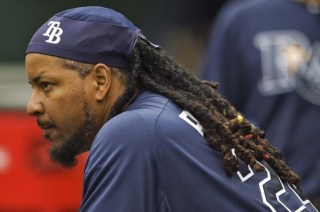
What Does Manny Being Manny Mean Now?


Manny Being Manny. It means a lot of things, and one more thing as of two days ago. It means being crazy, a well-known dread-locked goofball, best remembered for being part of the self-proclaimed Red Sox Idiot Teams of the 2000s. It means being one of the best hitters in baseball history; during his 19 year career, he had 2,574 hits, 555 home runs, a .585 career slugging percentage, and a .996 OPS. The only other players in baseball history to at least match him in all of those stats: Babe Ruth and Barry Bonds. And speaking of Barry Bonds, let's move on to what the third and most recent part of what Manny Being Manny means: steroid use.

It is impossible to know just how long Manny has been a steroid user. The most likely scenario is that he was using PEDs throughout his career. The main evidence for this was his appearance on a list of players who had tested positive for PEDs in 2003. That and the fact that he has been officially caught using PEDs twice, with both of those failed tests came within the past two years, is good enough evidence for me. The first came in 2009, during his time with the Dodgers, for which he served a 50 game suspension. Now, just a few games into the season with his new team, the Tampa Bay Rays, he's been caught again, and instead of serving the 100 game suspension, the 38 year old veteran has decided it was best to just hang up the cleats for good after a 19 year career.

And down goes another baseball hero from the decade. Another would-be sure-fire Hall of Famer that might just end up losing his spot because of two failed tests late in his career, when he was already seemingly bound for Cooperstown.

What a great time for this to happen to Manny though. Because of the fact that the news broke during the Barry Bonds trial, he's flying under the radar in terms of steroid stories. But even though it's being somewhat overlooked now, Manny's steroid use is going to be hot news at least when his name is first on the ballot for the Hall. After failing not one but two tests and reportedly a test several years earlier, how can Manny not be one of the poster-boys for steroids?

Manny's primary legacy can no longer be that of the legendary hitter whose bat as well as free-spirit made even Yankee fans want to like him. If people are going to remember guys like Bonds, McGwire, and Sosa for their steroid use, it's important to remember guys like Manny for their steroid use as well. Of course, I am not in any way glad that Ramirez's reputation was tarnished, in fact out of all the power hitters from the Steroid Era, I think Ramirez was the one that everyone wanted to be roid-free because of his affability, and as a result was the one guy people assumed could not have been taking steroids. However, he can't be let off of the hook because of his care-free demeanor and continued success after the proclaimed Steroid Era, when it was clear he was still taking roids not only during but also after the Era.

Of course, there is no definitive way to tell whether Manny was using steroids in his prime or only whether he only used them recently to get his power and bat going again, but what would it say about us if we were only concerned with juicers that used steroids during their primes instead of toward the end of their careers? Steroids are bad, period; there are no exceptions to the rule where one guy's steroid use should be different than another guy's. We can forgive and possibly forget, but if we want to do that then we need to do so with all steroid users as a matter of fairness, there should be no picking and choosing. Either you forgive them all, or you punish them all. But with Manny Being Manny, I don't know if he'll care either way.

Friday, April 8, 2011

Barry Bonds Will Always Be On Trial


As we move along into the second year of this new decade, it's interesting to reflect on what history will have to say about the decade that just passed, the first of not only a new century but a new millennium. Well, sports-wise, it was anything but fantastic. Looking back on the 2000s, it's tough for the front page headline not to be performance-enhancing drugs and how they tarnished not only our national pastime, but even some of our Olympic heroes, especially in track and field. It's tough to think that this won't be seen as the age of cheating, and the age of the asterisk.

PEDs have tarnished the reputations of the greatest athletes during this era; you know the list, Barry Bonds, A-Rod, Marion Jones, Mark McGwire, Floyd Landis, Sammy Sosa, and possibly even Roger Clemens and Lance Armstrong. So how will players involved in baseball, cycling and track and field especially, escape the shadow that steroids are sure to cast over them a few years from now when most will just be distant memories?

Fans are very forgiving of off-field transgressions, but when problems occur on the field, they're not quick to forget, unless athletes themselves are quick to apologize - see Andy Pettitte and even Jason Giambi. For athletes like Barry Bonds however, who fight the allegations consistently, the cheater label sticks on to them like white on rice. And that's why today, sports fans are chuckling at the fact that Bonds has a perjury trial, seven years after he told a grand jury he never knowingly took PEDs.

The sad part is, Bonds isn't even contesting the fact that he took PEDs anymore - it's been made clear by both sides in the case, that he has used steroids such as the cream and the clear - he's only contesting the accusation that he took them knowingly, which is what the perjury case is in fact about.

The case would be made easier if Bonds' former personal trainer Greg Anderson agreed to testify, which he has consistently refused to do, despite the fact that he had to serve about two weeks year in prison because of his refusal. That's not all Anderson has served time for however; back in 2005 he served three months for money laundering and guess what else ... steroid distribution. It's certainly not explicit evidence of Bonds' guilt, but it's tough to believe that Bonds would stick with Anderson if he too was not using the steroids. He certainly did not stick with Anderson during the first days of the trial; reports say that both times Anderson walked by Barry in court today, Bonds averted his eyes.

At 6:51 p.m. yesterday, Bonds' fate was handed over to a jury, which will continue deliberations on Monday. People such as his former business manager, former personal shopper, former girlfriend/mistress, and other ballplayers that Anderson gave drugs to, have all testified against Bonds, but the prosecution has reportedly been weak up until these past few days, while Bonds' defense has been impressive throughout. From a legal standpoint, it's been noted that while the prosecution had tons of witnesses, they may have not had enough actual evidence to prove Barry Bonds actually knew he was taking steroids when he told a grand jury he did not. The prosecutors have appealed to common sense, and have essentially brought the stories of all the witnesses together, but it is tough to tell whether they have actually tied the knot between them with tangible-enough evidence. So while it's common sense to presume Bonds knew what he was doing as everyone else his trainer gave steroids to did, it does not necessarily mean there is enough evidence to prove it.

It has taken a long time to get to this point, and even this trial will not be the end for mention of PED use in sports. Every year around Hall of Fame voting time, the debate will begin whether to elect players who took steroids like Barry Bonds to the Hall or not. So, Bonds not only faces the jury for his perjury trial now, but hereafter he will face a jury of sportswriters debating his Hall of Fame status and a jury of baseball fans, wondering what exactly to make of his legacy.

Wednesday, March 30, 2011

MLB 2011 Preview: The Start of Something New?


As every baseball fan knows, the favorites to win the World Series as usual, are the Phillies, the Red Sox and the Yankees, as it's been for essentially the past decade. But, all I really get from that is that the dominance of those teams must be coming to an end soon. I mean no one's young forever right? So if they do falter soon, who's going to take the power from them? You may want to look to a couple of teams from the NL Central and West for the answer.

Opening Day 2011 is tomorrow and even though the Phillies are the clear favorites to win it all with their All Star rotation, and the Red Sox and Yanks will most likely come out of the AL, these teams may quickly have their runs come to an end, sooner than their respective spoiled fans may like to think. In case you've forgotten, just 15 years ago, none of the aforementioned three teams could buy a championship. The Yanks were about to end a 15 year skid that had been going on since the early 80s, the Red Sox were still in the midst of the Curse of the Bambino and the Phillies were the Lovable Losers. So, what's to say that the same thing won't happen in the near future after these teams have had their times in the spotlight.

The Phillies, Red Sox and Yanks are all home to aging superstars. Three of the four All-Star pitchers on the Phils staff are at least 32 years old, while hitters like Jimmy Rollins and Chase Utley are quickly starting to show their age through injuries; even Ryan Howard is 31. Their core is a bunch of old guys. They have some younger players like Hamels and a nice young prospect in Domonic Brown, but that's about it. It makes me wonder if this team can contend for a championship for more than the next two or three years.

Then you have the Red Sox. The Sox's pitching staff is actually relatively young with rising stars like Lester and Buccholz, but their offense is filled with 30+ year olds that have already peaked. Their only young guys are Ellsbury and Pedroia. In order to succeed in a constantly ruthless AL East they'll need more than just a few pitchers.

Finally, you of course have the Yanks. There's Jeter, A-Rod, Jorge, and Teixeira, all possibly past their primes. Then pitching-wise, there's C.C. and Burnett, the team's top two starters after the loss of Pettitte to retirement. Sure there is young talent in Cano, Hughes, possibly even Ivan Nova and Yankee fans hope still some in Joba Chamberlain, but what's to come of the Yanks when all the of the superstars retire? I guess you can just go out and sign some more if you're the Yanks (or the Phillies or Red Sox), but there's going to have to be a gap in success once the core of at least Jeter and A-Rod go, and as we've seen over and over, free agent stars don't win championships, well-developed farm systems and the ability to rebuild do.

Think about it. The Yankee dynasty in the 1990s was filled with farm system players, and then they started buying aging free agents and fell apart. The Marlins won twice alone in seven years, due to their farm system and ability to rebuild the past decade and a half. The Giants last year are another testament to the importance of young talent. The teams with the largest payrolls may make the playoffs every year, but they're not the ones winning every year; very rarely do we see dynasties anymore, as the only twice since the 1960s have two teams won in a span of ten years: the 1990s Yankees and 1970s A's.

And who's to say superstars are going to want to come to NY? I had a wake-up call from my New York state of mind this summer, as many others did when LeBron, Wade and Bosh all chose to go to Miami instead of NYC. Who knows? Maybe New York isn't the center of the world like all New Yorkers think it is. Also, in a sports culture in which individual athletes are being judged more and more primarily on the number of championships they've won, more athletes are sacrificing money (at least a little bit) for championships.

The biggest up-and-comer in baseball right now is easily the Cincinnati Reds. Their team is full of young rising stars ready to form the next Big Red Machine (the nickname of the Reds teams of the 70s). On offense, there's not only Joey Votto, but guys like Jay Bruce, Drew Stubbs, and Brandon Phillips. Then you have the list of pitchers, including Edinson Volquez, Johnny Cueto, Mike Leake, Aroldis Chapman and even Travis Wood, all highly touted as the stars of the future. As the Phillies begin their decline, it's easy to see that the Reds will be the next big team to take over the NL.

But before the Reds take over the Phillies, let's not forget about who they'll have to beat first: the reigning World Series champ San Francisco Giants. Maybe this whole transition from old teams to new teams has started already with the Giants taking a title home last year. Although San Francisco is not necessarily a small market like the other teams, it isn't an old school powerhouse. We already know the combination of Tim Lincecum and Matt Cain might just be one of the best 1-2 punches in baseball, save for the Phillies, but they also (after you jump over Barry Zito of course) have talent at the end of their rotation too. It seems as if the fourth starter in the rotation, Jonathan Sanchez, is entering his prime, and the new object of praise by scouts for this year is Madison Bumgarner, the 21 year old phenom who many expect to make this the rotation of the future. Lest we forget the Giant offense, led by Buster Posey, who many expect not to be the next Joe Mauer, but to be even better than Mauer himself. Kung Fu Panda Pablo Sandoval is the other prime young talent on this team, settling into his role as one of the top players on the squad.

The final two up-and-comers have to be the Rockies and Athletics, the Rockies with a plethora of both hitting and pitching, and the A's with a ton of great young pitchers. The Rockies are going to be serving as the great nuisance to the Giants in the West this year, as they fight for a wildcard spot most likely against teams like the Brew Crew and Braves. The team formerly known as Todd Helton's has been handed over to the likes of Troy Tulowitzki and Carlos Gonzalez, two players with Top 10 potential. Pitching-wise the Rockies have young potential with Ubaldo Jimenez and Jhouyls Chacin but I'm cautious of giving them too much credit. The A's on the other hand have a pitching staff that deserves all the credit it garners. With the Angels in decline, the A's will contend with the Rangers (who also have a relatively young team) this year for the AL Central title, even though three of their starters are under the age of 25, and a solid second starter, Dallas Braden is only 27, similar to the trio of Zito, Hudson and Mulder they had in the early 2000s. Getting their bats alive could be a problem, but if not this year for the A's, certainly the next few years should bring prosperity and a chance at a title.

While the Phillies, Red Sox and Yanks have been signing stars, other teams have been building and preparing for the future, and I believe that, that future is now (hopefully I'm more successful than the Mets were in predicting that: http://network.yardbarker.com/mlb/article_external/the_future_is_now/14048). Within the next two years, we'll see these young powerful teams, most of them from the NL, challenging the perennial powerhouses. It's not easy to overthrow teams, especially in a sport where there are no salary caps, and the teams you're trying to get rid of play in big markets with big payrolls. But, already last year, the big teams showed that they can be beaten, I think it's just a matter of how easily they'll go down.