Tuesday, November 8, 2011

The Aftermath of Gruesome Acts at Penn State

Scandal. It's a word we've heard increasingly used in collegiate athletics, and more specifically college football, in the past decade. Players get paid and treated like kings, coaches and agents use less than savory tactics to get the players they want, boosters do anything in their power to support the team, et cetera, et cetera. Sometimes, it seems as if more coverage is devoted to the scandals of college football than to actual college football year round. But if there's one person that the sports world thought the word "scandal" would never be used in tandem with, one program that we hoped and thought we knew was clean, it would be Joe Paterno and his Penn State Nittany Lions.

The Penn State football program was supposed to be the standard of college football, the "city upon a hill," the way you were supposed to run a college football program. Its coach was the winningest coach in the history of the game, its players consistently graduated at higher rates than any other perennial contender, and it seemed as if it went about its recruiting cleanly. But what has happened is much worse than any recruiting violation, any shady booster, or any unruly or compensated player.

This past weekend Jerry Sandusky, a long-time assistant coach and defensive coordinator for the Nittany Lions and once considered to be Joe Paterno's eventual successor, was arrested for 40 counts of allegations concerning the sexual abuse of young boys over a decade and a half. Even though Sandusky retired in 1999 (a very sudden retirement, which raises questions as to whether the program knew of his disgraceful acts and forced him to resign), he was given status as coach emeritus which included perks such as an office in and access to Penn State's football facilities, where much of his abuse of children took place. What is worse, is that he found most of his victims through his charity, The Second Mile, which is supposed to help children dealing with adversity.

Now, before we get into the rest of the story, obviously the most important thing to remember is that the lives of so many children were ruined and hurt forever because of one man's villainous actions. The most important part isn't Paterno, Penn State football or the university officials involved, it's the children involved in the case. But with that point stated, the way Penn State has handled the aftermath of these events has been terrible. Obviously, the firing of President Graham Spanier is understandable being that all of this happened under his watch as President and therefore leader of the university, but to fire Joe Paterno seems to be crossing the line.

Not to understate the gruesomeness of Sandusky's acts and the effect those acts had on its victims, but to see Joe Paterno go out like this, being fired from the university that he more than anyone else helped to build into the powerhouse it is, both athletically and academically, fired from the university that he devoted his whole life to, is terrible.

Obviously Paterno could have and probably should have done more. He has always been for better or worse, the eternal optimist, the man that rarely dealt with the big problems and seemed to live in eternal paradise, when sometimes his job called for more. If he was just a regular coach, he would only be expected to report to the athletic director about the vile act that his graduate assistant, Mike McQueary saw take place, but Joe Paterno's not just a coach. He is Penn State football, and has many times claimed to lead a moral program, best shown through the program's slogan, "Success with Honor." For him not to do more with the knowledge he had, certainly was not the right thing to do morally.

But at the same time, Paterno is not responsible for these acts, and is not even partially responsible for the acts that Sandusky committed after he found out in 2002 what Sandusky was doing. Sandusky is fully responsible for every single one of the acts that he committed. Second of all, even though he was morally wrong in not pursuing justice against Sandusky when the Athletic Director Tim Curley and the Senior Vice President for Finance and Business Gary Schultz failed to do so, Paterno fulfilled his legal responsibility in informing his superior about the act. He is still just a football coach, whose job is to focus solely on his football team, and this inaction is only just cause for forced resignation at most, not firing.

This brings us to our next point. To repeat, Joe Paterno had been the head coach of Penn State football for 46 seasons, and had been with the program for almost 62 years. He has arguably done more for Penn State and State College than any coach in all of sports has done for a team, institution or city. He and his wife Sue sent all of their five kids to Penn State, have contributed more than $4 million to a number of academic departments and colleges within the school, and helped to raise over $13.5 million for the expansion of the library, which was subsequently named after them. Very rarely, in this day and age do college coaches put down real roots where they coach, but Joe Paterno has lived and breathed Penn State ever since he arrived in State College. So yes, Paterno was irresponsible almost to the point of committing a moral crime, but still, he is only guilty of moral irresponsibility and inaction. To fire a man like Joe Paterno for that, for doing what he was required to do, but not going the extra mile, is uncalled for. No offense to the children and the families and friends that were affected by this tragedy, but Paterno earned the right to go out on his own terms in this situation or at least make it appear that he went out on his own terms. Penn State should have at least told him of its plans to fire him (let alone fire him in person, as instead he was told over the phone that his 62 year stay with the football program was over), and let him resign immediately on his own accord, even though he deserved to have one last Senior Day with the program he built from scratch. Maybe he wouldn't have deserved the cheers that may have come with being on the sidelines for that Senior Day, or even the win that may have come from that Senior Day, but he deserved for one last time to be out there coaching the team he devoted his life to.

Sandusky deserves whatever punishment he gets. Curley and Schultz deserve whatever punishment they get. Spanier deserved the punishment he got. But Joe Paterno, the man who has done so much good, the man who helped teach young men how to succeed, the man who made Penn State, Penn State, the man who may be the most important person in Pennsylvania, after 61-plus years, did not deserve the punishment he received.

Monday, April 25, 2011

The Quarterback Controversy


Meet Blaine Gabbert. He apparently has all the "intangibles" that it takes to be an NFL quarterback; he stands at 6'5" weighs 235 pounds and has a 10 inch hand span. As a result of these "intangibles," Gabbert might just be the first quarterback and possibly the first pick overall taken in this year's NFL Draft.

Wait, when you say Blaine Gabbert, you mean Mizzou's old QB? The guy who only threw for 16 TDs last year (tied for 59th best among quarterbacks), compared to his 9 interceptions (tied for 58th most thrown) and finished 21st in passing yards, with 3,186 of them? That guy is going to be selected early? But he's tall and his hands are big, that's good enough right?

I have never understood all of the hype surrounding guys like Blaine Gabbert, who impress people because they look like NFL quarterbacks. People seem to magically forget that in football you don't just have to look the part, you have to play it as well.

If you look at the starting QBs in the NFL today, there really is no exact description of what they look like, how they got to where they were, where they were drafted and what their college stats are like. There is the golden boy Peyton Manning, the guy that has all the intangibles, was successful in college, got picked high in the draft and has been successful in the NFL. Then, there are the Tom Bradys, guys who have all the intangibles, don't have a great college career, get drafted in the late rounds, and nevertheless become a superstar in the NFL. Then, there are guys like Drew Brees, who might not even be six feet tall, had great success in college, were looked over in the draft because of their size and have still been great in the NFL.

Of course, there's the saying that success at the college level does not always translate into success at the pro level, and that is right for the most part. It's right in that college and pro football are two totally different games, which sometimes require different types of quarterbacks. But if success at the college level does not translate into success at the pro level, wouldn't it follow that mediocrity at the college level would translate into even less success at the pro level? How can someone play well against the best football players in the world, when they struggle against college football players?

Now maybe Blaine Gabbert might just got on to be a great quarterback; as of right now it's too early to look him over entirely just yet. But, it's clear that the majority of today's quarterbacks that are successful in the NFL, were also successful in college. Out of the top 10 passing leaders from last year (based on yards), only Tom Brady and arguably Matt Schaub got less attention and played worse in college than Gabbert. Of course, like Gabbert both of them had outstanding physical size, and as a result (in addition to some other key factors) are making it in the NFL. But that's the minority; most guys not only have to have the size, they also have success in all levels of football.

Blaine Gabbert did not ask to become this year's hype machine, and he has to be happy that he's been hyped up so much. Come Thursday, he will almost certainly be one of the first 10 names called, if not the first five or the first, making millions more than he ever though he would make just a few months ago. Who knows, maybe Blaine Gabbert will prove himself just like Jay Cutler or Ben Roethlisberger, guys who had all the intangibles but not necessarily the stats or the greatest college competition. But then again, there are the Ryan Leafs, the Matt Leinarts, the never-ending list of guys who seemingly had all the intangibles to be an NFL quarterback and never made it. It’s not a revolutionary idea. If (in general of course) only the top middle school athletes make the best high school athletes and only the top high school athletes make good college athletes would it not then follow, that only the best college athletes make good professional athletes? Of course, there are always exceptions (which Blaine Gabbert could be), but they are called exceptions for a reason, because they do not follow the usual rule.

Saturday, April 9, 2011

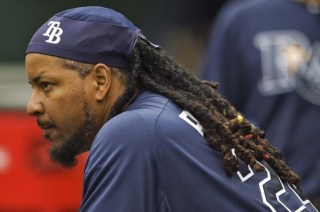
What Does Manny Being Manny Mean Now?


Manny Being Manny. It means a lot of things, and one more thing as of two days ago. It means being crazy, a well-known dread-locked goofball, best remembered for being part of the self-proclaimed Red Sox Idiot Teams of the 2000s. It means being one of the best hitters in baseball history; during his 19 year career, he had 2,574 hits, 555 home runs, a .585 career slugging percentage, and a .996 OPS. The only other players in baseball history to at least match him in all of those stats: Babe Ruth and Barry Bonds. And speaking of Barry Bonds, let's move on to what the third and most recent part of what Manny Being Manny means: steroid use.

It is impossible to know just how long Manny has been a steroid user. The most likely scenario is that he was using PEDs throughout his career. The main evidence for this was his appearance on a list of players who had tested positive for PEDs in 2003. That and the fact that he has been officially caught using PEDs twice, with both of those failed tests came within the past two years, is good enough evidence for me. The first came in 2009, during his time with the Dodgers, for which he served a 50 game suspension. Now, just a few games into the season with his new team, the Tampa Bay Rays, he's been caught again, and instead of serving the 100 game suspension, the 38 year old veteran has decided it was best to just hang up the cleats for good after a 19 year career.

And down goes another baseball hero from the decade. Another would-be sure-fire Hall of Famer that might just end up losing his spot because of two failed tests late in his career, when he was already seemingly bound for Cooperstown.

What a great time for this to happen to Manny though. Because of the fact that the news broke during the Barry Bonds trial, he's flying under the radar in terms of steroid stories. But even though it's being somewhat overlooked now, Manny's steroid use is going to be hot news at least when his name is first on the ballot for the Hall. After failing not one but two tests and reportedly a test several years earlier, how can Manny not be one of the poster-boys for steroids?

Manny's primary legacy can no longer be that of the legendary hitter whose bat as well as free-spirit made even Yankee fans want to like him. If people are going to remember guys like Bonds, McGwire, and Sosa for their steroid use, it's important to remember guys like Manny for their steroid use as well. Of course, I am not in any way glad that Ramirez's reputation was tarnished, in fact out of all the power hitters from the Steroid Era, I think Ramirez was the one that everyone wanted to be roid-free because of his affability, and as a result was the one guy people assumed could not have been taking steroids. However, he can't be let off of the hook because of his care-free demeanor and continued success after the proclaimed Steroid Era, when it was clear he was still taking roids not only during but also after the Era.

Of course, there is no definitive way to tell whether Manny was using steroids in his prime or only whether he only used them recently to get his power and bat going again, but what would it say about us if we were only concerned with juicers that used steroids during their primes instead of toward the end of their careers? Steroids are bad, period; there are no exceptions to the rule where one guy's steroid use should be different than another guy's. We can forgive and possibly forget, but if we want to do that then we need to do so with all steroid users as a matter of fairness, there should be no picking and choosing. Either you forgive them all, or you punish them all. But with Manny Being Manny, I don't know if he'll care either way.

Friday, April 8, 2011

Barry Bonds Will Always Be On Trial


As we move along into the second year of this new decade, it's interesting to reflect on what history will have to say about the decade that just passed, the first of not only a new century but a new millennium. Well, sports-wise, it was anything but fantastic. Looking back on the 2000s, it's tough for the front page headline not to be performance-enhancing drugs and how they tarnished not only our national pastime, but even some of our Olympic heroes, especially in track and field. It's tough to think that this won't be seen as the age of cheating, and the age of the asterisk.

PEDs have tarnished the reputations of the greatest athletes during this era; you know the list, Barry Bonds, A-Rod, Marion Jones, Mark McGwire, Floyd Landis, Sammy Sosa, and possibly even Roger Clemens and Lance Armstrong. So how will players involved in baseball, cycling and track and field especially, escape the shadow that steroids are sure to cast over them a few years from now when most will just be distant memories?

Fans are very forgiving of off-field transgressions, but when problems occur on the field, they're not quick to forget, unless athletes themselves are quick to apologize - see Andy Pettitte and even Jason Giambi. For athletes like Barry Bonds however, who fight the allegations consistently, the cheater label sticks on to them like white on rice. And that's why today, sports fans are chuckling at the fact that Bonds has a perjury trial, seven years after he told a grand jury he never knowingly took PEDs.

The sad part is, Bonds isn't even contesting the fact that he took PEDs anymore - it's been made clear by both sides in the case, that he has used steroids such as the cream and the clear - he's only contesting the accusation that he took them knowingly, which is what the perjury case is in fact about.

The case would be made easier if Bonds' former personal trainer Greg Anderson agreed to testify, which he has consistently refused to do, despite the fact that he had to serve about two weeks year in prison because of his refusal. That's not all Anderson has served time for however; back in 2005 he served three months for money laundering and guess what else ... steroid distribution. It's certainly not explicit evidence of Bonds' guilt, but it's tough to believe that Bonds would stick with Anderson if he too was not using the steroids. He certainly did not stick with Anderson during the first days of the trial; reports say that both times Anderson walked by Barry in court today, Bonds averted his eyes.

At 6:51 p.m. yesterday, Bonds' fate was handed over to a jury, which will continue deliberations on Monday. People such as his former business manager, former personal shopper, former girlfriend/mistress, and other ballplayers that Anderson gave drugs to, have all testified against Bonds, but the prosecution has reportedly been weak up until these past few days, while Bonds' defense has been impressive throughout. From a legal standpoint, it's been noted that while the prosecution had tons of witnesses, they may have not had enough actual evidence to prove Barry Bonds actually knew he was taking steroids when he told a grand jury he did not. The prosecutors have appealed to common sense, and have essentially brought the stories of all the witnesses together, but it is tough to tell whether they have actually tied the knot between them with tangible-enough evidence. So while it's common sense to presume Bonds knew what he was doing as everyone else his trainer gave steroids to did, it does not necessarily mean there is enough evidence to prove it.

It has taken a long time to get to this point, and even this trial will not be the end for mention of PED use in sports. Every year around Hall of Fame voting time, the debate will begin whether to elect players who took steroids like Barry Bonds to the Hall or not. So, Bonds not only faces the jury for his perjury trial now, but hereafter he will face a jury of sportswriters debating his Hall of Fame status and a jury of baseball fans, wondering what exactly to make of his legacy.

Wednesday, March 30, 2011

MLB 2011 Preview: The Start of Something New?


As every baseball fan knows, the favorites to win the World Series as usual, are the Phillies, the Red Sox and the Yankees, as it's been for essentially the past decade. But, all I really get from that is that the dominance of those teams must be coming to an end soon. I mean no one's young forever right? So if they do falter soon, who's going to take the power from them? You may want to look to a couple of teams from the NL Central and West for the answer.

Opening Day 2011 is tomorrow and even though the Phillies are the clear favorites to win it all with their All Star rotation, and the Red Sox and Yanks will most likely come out of the AL, these teams may quickly have their runs come to an end, sooner than their respective spoiled fans may like to think. In case you've forgotten, just 15 years ago, none of the aforementioned three teams could buy a championship. The Yanks were about to end a 15 year skid that had been going on since the early 80s, the Red Sox were still in the midst of the Curse of the Bambino and the Phillies were the Lovable Losers. So, what's to say that the same thing won't happen in the near future after these teams have had their times in the spotlight.

The Phillies, Red Sox and Yanks are all home to aging superstars. Three of the four All-Star pitchers on the Phils staff are at least 32 years old, while hitters like Jimmy Rollins and Chase Utley are quickly starting to show their age through injuries; even Ryan Howard is 31. Their core is a bunch of old guys. They have some younger players like Hamels and a nice young prospect in Domonic Brown, but that's about it. It makes me wonder if this team can contend for a championship for more than the next two or three years.

Then you have the Red Sox. The Sox's pitching staff is actually relatively young with rising stars like Lester and Buccholz, but their offense is filled with 30+ year olds that have already peaked. Their only young guys are Ellsbury and Pedroia. In order to succeed in a constantly ruthless AL East they'll need more than just a few pitchers.

Finally, you of course have the Yanks. There's Jeter, A-Rod, Jorge, and Teixeira, all possibly past their primes. Then pitching-wise, there's C.C. and Burnett, the team's top two starters after the loss of Pettitte to retirement. Sure there is young talent in Cano, Hughes, possibly even Ivan Nova and Yankee fans hope still some in Joba Chamberlain, but what's to come of the Yanks when all the of the superstars retire? I guess you can just go out and sign some more if you're the Yanks (or the Phillies or Red Sox), but there's going to have to be a gap in success once the core of at least Jeter and A-Rod go, and as we've seen over and over, free agent stars don't win championships, well-developed farm systems and the ability to rebuild do.

Think about it. The Yankee dynasty in the 1990s was filled with farm system players, and then they started buying aging free agents and fell apart. The Marlins won twice alone in seven years, due to their farm system and ability to rebuild the past decade and a half. The Giants last year are another testament to the importance of young talent. The teams with the largest payrolls may make the playoffs every year, but they're not the ones winning every year; very rarely do we see dynasties anymore, as the only twice since the 1960s have two teams won in a span of ten years: the 1990s Yankees and 1970s A's.

And who's to say superstars are going to want to come to NY? I had a wake-up call from my New York state of mind this summer, as many others did when LeBron, Wade and Bosh all chose to go to Miami instead of NYC. Who knows? Maybe New York isn't the center of the world like all New Yorkers think it is. Also, in a sports culture in which individual athletes are being judged more and more primarily on the number of championships they've won, more athletes are sacrificing money (at least a little bit) for championships.

The biggest up-and-comer in baseball right now is easily the Cincinnati Reds. Their team is full of young rising stars ready to form the next Big Red Machine (the nickname of the Reds teams of the 70s). On offense, there's not only Joey Votto, but guys like Jay Bruce, Drew Stubbs, and Brandon Phillips. Then you have the list of pitchers, including Edinson Volquez, Johnny Cueto, Mike Leake, Aroldis Chapman and even Travis Wood, all highly touted as the stars of the future. As the Phillies begin their decline, it's easy to see that the Reds will be the next big team to take over the NL.

But before the Reds take over the Phillies, let's not forget about who they'll have to beat first: the reigning World Series champ San Francisco Giants. Maybe this whole transition from old teams to new teams has started already with the Giants taking a title home last year. Although San Francisco is not necessarily a small market like the other teams, it isn't an old school powerhouse. We already know the combination of Tim Lincecum and Matt Cain might just be one of the best 1-2 punches in baseball, save for the Phillies, but they also (after you jump over Barry Zito of course) have talent at the end of their rotation too. It seems as if the fourth starter in the rotation, Jonathan Sanchez, is entering his prime, and the new object of praise by scouts for this year is Madison Bumgarner, the 21 year old phenom who many expect to make this the rotation of the future. Lest we forget the Giant offense, led by Buster Posey, who many expect not to be the next Joe Mauer, but to be even better than Mauer himself. Kung Fu Panda Pablo Sandoval is the other prime young talent on this team, settling into his role as one of the top players on the squad.

The final two up-and-comers have to be the Rockies and Athletics, the Rockies with a plethora of both hitting and pitching, and the A's with a ton of great young pitchers. The Rockies are going to be serving as the great nuisance to the Giants in the West this year, as they fight for a wildcard spot most likely against teams like the Brew Crew and Braves. The team formerly known as Todd Helton's has been handed over to the likes of Troy Tulowitzki and Carlos Gonzalez, two players with Top 10 potential. Pitching-wise the Rockies have young potential with Ubaldo Jimenez and Jhouyls Chacin but I'm cautious of giving them too much credit. The A's on the other hand have a pitching staff that deserves all the credit it garners. With the Angels in decline, the A's will contend with the Rangers (who also have a relatively young team) this year for the AL Central title, even though three of their starters are under the age of 25, and a solid second starter, Dallas Braden is only 27, similar to the trio of Zito, Hudson and Mulder they had in the early 2000s. Getting their bats alive could be a problem, but if not this year for the A's, certainly the next few years should bring prosperity and a chance at a title.

While the Phillies, Red Sox and Yanks have been signing stars, other teams have been building and preparing for the future, and I believe that, that future is now (hopefully I'm more successful than the Mets were in predicting that: http://network.yardbarker.com/mlb/article_external/the_future_is_now/14048). Within the next two years, we'll see these young powerful teams, most of them from the NL, challenging the perennial powerhouses. It's not easy to overthrow teams, especially in a sport where there are no salary caps, and the teams you're trying to get rid of play in big markets with big payrolls. But, already last year, the big teams showed that they can be beaten, I think it's just a matter of how easily they'll go down.

Wednesday, March 23, 2011

Yankees 2011 Preview


The Yankees' 2011 season starts tomorrow against the Detroit Tigers. The Yanks were a wildcard team last year, despite having the third best record in baseball. After sweeping the Twins in the ALDS, they lost in 6 games in the ALCS to the Rangers, even though they were at one point leading the series 2-0. As always they'll be one of the favorites to win the World Series, only behind the Red Sox and the Phillies, but the question still seems to be the same: when are the aging players finally going to have to hand over the team to the crop of rising youngsters?

The first problem the Yankees have is no secret: pitching. After Andy Pettitte decided to retire at the age of 38 this off-season, the Yanks were only left with three proven pitchers in C.C. Sabathia, A.J. Burnett and Phil Hughes, only one of which (Sabathia), has been consistently good. Sure, some days Burnett can come out and look like a Cy Young candidate, but he has almost as many outings where he looks like he should be playing Single-A ball. Hughes started off looking like a totally new pitcher in April and May last season, but fell off the rest of the way, with a 7-6 record and 4.90 ERA following the All Star Break. It also doesn't help that C.C. looks to be leaving his prime at 31, while Burnett seems way past his at 34.

The likely fourth starter in the rotation will be 24 year old Ivan Nova. Last year, Nova pitched 42 innings for the Yanks and finished with a 4.50 ERA, pitching extremely well down the stretch, and wonderfully during his time in the minor leagues. But there's a difference between being a rookie phenom and being the fourth starter straight out of spring training, especially if you're on the Yankees; we saw it not work out with Joba Chamberlain, and even with Ian Kennedy a few years back.

Then there's Freddy Garcia. After Sergio Mitre was traded to the Brewers, the fifth spot became the 34 year old's to take. Relative to other fifth starters in Major League Baseball, Garcia is not necessarily chopped liver, but he's no standout either; he's had some solid seasons with both the Mariners and the White Sox, but has been injury prone the past three years, and if he can't handle the job this year, it may have to be handed over to Bartolo Colon. Of course, the success of the Yankees depends more on the success of Ivan Nova than it does Freddy Garcia; you know at his best Garcia will be mediocre, while Nova could be spectacular (at least for a young guy) or totally fall apart as too many new pitchers on the Yankees have.

The pitching dilemma is not the only problem that the Yankees have however; there seems to be a huge age gap when it comes to Yankee hitters. The familiar names - Jeter, A-Rod, Jorge - aren't just old, they're really old. Jeter turns 37 in June, Rodriguez turns 36 in July, and Jorge and Jorge turns 40 in August. The only everyday guys that will be younger than 30 by season's end will be Brett Gardner, Robbie Cano, and Russell Martin. Even though the Yankee line-up is still one of the most formidable in baseball, after Jeter and A-Rod retire, this team is going to have an identity crisis on its hands.

Cano will most likely be the successor to Jeter as team leader, but the Yanks will still have to rebuild and try to find a new set of true Yankees like they had during the 90s. Jesus Montero and Ivan Nova are promising, but the Yanks need to finally decide whether it's time to build up their farm system again like they did before the dynasty or just continue to try to live off of big free agent signings of proven, older guys (which they hopefully will still be able to get). The Yanks haven't really needed new talent for 15 years, when Jeter's group of guys came in. Now however, highlighted by Pettitte's departure this off-season, that class is preparing to retire. So maybe this year and the next will be promising for the Yankees, but there are some good young teams ready to threaten their dominance and if they don't figure out how to handle them, they may be on the outside looking in when October rolls around.

Monday, March 7, 2011

Rules Are Rules


Last week, BYU dismissed one of its top basketball players from the team, for violating the school’s honor code. The crime? Having premarital sex with his girlfriend. Brandon Davies, a sophomore power forward for the team, who was a key outlet in the post ranking third on the team in points and first in rebounds before his suspension, is awaiting a decision on not only whether he can remain with the team in the future, but whether he will be able to remain at the school.

Comparing Davies’ act to other violations committed by college athletes, is like comparing shoplifting a pack of gum to murder in the first degree. Today, college sports is filled with athletes with criminal records, and a reputation for prioritizing sports first, partying second and studying third. Of course, that is not to say that all college athletes are troublemakers; most are probably working hard in school, and besides being athletes, try to live like any other college student would. But, compared to what some other college athletes get away with, Davies’ act wouldn’t even come up as a blip on the screen. Then again, BYU is not any other school.

Brigham Young University is famous for its strict rules, being that it is owned by The Church of Jesus Christ of Latter-day Saints (the Mormons). The school requires all of its students to refrain from things such as academic dishonesty, extramarital sex, and drug and alcohol use. Students even have to follow a set of dress and grooming rules, and are not allowed to have beards or goatees or wear revealing clothing.

So for BYU, it didn’t matter that the basketball team is currently in the middle of arguably its best season ever, Davies was not going to be let off the hook. No suspension that starts next year after Jimmer Fredette is gone, no stern talking to without suspension, no having to wait for the NCAA to get involved; BYU stood by its standards, no matter how rigorous and strict they are.

Of course, one can say that if a school with such deep religious affiliation did not stand firm by its own guidelines, then there would be no hope for any school to comply with NCAA rules, let alone their own. But, BYU did not need to suspend Davies, there was no NCAA rep hounding them for suspensions and information, they did so on their own accord, and quite frankly that deserves a lot of credit in today’s college athletics climate.

But BYU is not the only one that deserves credit. Brandon Davies also deserves a ton of respect. OK, maybe not respect – he did violate the school’s laws – but still, the fact that a college sophomore decided to come out and admit to what he did, fully knowing the consequences he could face, took a heck of a lot of courage. He could just have easily kept what he did a secret, never admitting what he did to the school or waiting at least until after the tournament. But he decided to admit to his wrongs. That took more principle and courage than most 19 year olds would be able to summon.

Some can say that Davies knew what he was getting into when he went to BYU; he grew up in nearby Provo, Utah, and similar to every other kid and therefore should have been expected not only to follow the school’s rules but also admit to his wrongdoings. It is true that he should not have broken the rules in the first place, and by admitting his wrongs, he’s letting down his team, but being a college kid he’s expected to make some mistakes. What he is not expected to do at such a young age is handle making that mistake in such a mature way.

Most people have laughed off this story, wondering how BYU could even think to suspend him, even dismiss him from the school for something that has essentially become acceptable for a large portion of society. But different people have different beliefs and principles, and in an atmosphere where those beliefs and principles are constantly being compromised and looked over, it is finally nice to see both a college team and athlete put more importance on winning the right way, than just winning.

Sunday, February 27, 2011

The NBA's Identity Crisis


Last night, the Knicks made a statement when they beat the Heat 91-86 in a nail-biter. The game was exactly the type of game that the NBA has been waiting to market to its fans, filled with big names like LeBron, Wade, Bosh, Carmelo, A'mare and even Chauncey Billups. The NBA is finally back to being exciting again, and David Stern must be jumping for joy over the fact that New York once again has a great basketball team, and that the Knicks-Heat rivalry is on its way to being renewed.

Ever since Paul Pierce, Ray Allen and Kevin Garnett joined forces in Boston, it seems as if the new fad in the NBA is friends creating super-teams. This past summer for example, LeBron decided to take his talents to South Beach to join Dwyane Wade and Chris Bosh on the Heat. Now the Knicks are hoping to form a similar trio of superstars; in addition to signing A'mare Stoudemire this past summer, the Knicks recently acquired Carmelo Anthony to form a dynamic duo and a trio if you count Billups. Based on what happens with the labor situation in the NBA this summer and whether a hard salary cap is installed or not, there are rumors floating around that Chris Paul or Dwight Howard may be the next big acquisition for the Knicks this upcoming summer.

On the surface, these super-teams seem great for league publicity, as it seemed as if ESPN was on constant LeBron watch for a week during last summer's free agency, something I know I followed every hour of every day. The teams also provide great games to watch; Sunday games featuring teams like the Lakers, Celtics, Knicks and Heat make for some of the best entertainment in sports. So sure, it's nice to have the big talent in the big cities, but with the majority of the NBA's top 10 players in four markets, what are the 26 other NBA teams left with? Not much.

There is only so much grade-A talent to go around and if it all goes to the same place, a lot of teams are going to be left out of the picture. The quality of basketball that the majority of the country will be seeing, especially fans living in small markets, will plunge dramatically, and the marketability of teams in small markets, who may have even less of an ability to attract big names, will also go downhill. As a result, fans of these teams will instead turn to their city or state's other sports teams, opting for the likes of college basketball, baseball or God forbid, hockey.

The league can always take the road of promoting big market teams however, and hope that fans from small markets without big stars tune in not just to watch their local team, but also to watch the superstar teams that are beginning to take shape. If the NBA markets its big teams the right way and is able to have at least one big game most nights of the week, ratings may keep going up and the NBA may keep making gains in popularity.

Of course, there is always the possibly of contraction. A lot of the small market teams were already losing money before super-teams started forming - hence the possibility of a lockout this summer. However, if the NBA decides to cut some franchises, the amount of talent on each team would increase, and the gap between the top teams and the bottom teams would diminish. This move would also bring back the attention of fans in smaller markets whose teams would get a boost. Cutting teams like the Clippers and Nets, who have other franchises like the Lakers and Knicks for fans to switch allegiances to could be a good move; the NBA saves money without losing fans.

The league is undergoing a huge transition phase right now. Its young stars - from the 2003 and 2005 drafts especially - are now all grown up, and entering their primes. The magnitude of talent that the NBA currently has does not come around very often; the league better know how to use it.

Thursday, February 24, 2011

Revenge of the Nerds


Most teams don't dwell too long on one victory with coaches always pushing their players to move on to the next game, but with Caltech, the coach may be encouraging his players to dwell on this victory for as long as possible. Why? Because Caltech's win over Occidental College the other night was the team's first conference win since January 23, 1985.

Caltech probably went into their game Wednesday night with the same feeling that they've gone into every conference game with, looking optimistic on the outside, but feeling gloomy, distressed and fearful on the inside. There was no reason to feel very optimistic; the Caltech Beavers had lost their last 310 games against fellow teams from the Southern California Intercollegiate Athletic Conference; no one on the team was even been born the last time Caltech men's basketball won a game. Their opponent Occidental College was 12-13 on the year, not great but better than Caltech's 5-20 overall record. So why would this game be any different than the rest of them? Because of a senior named Ryan Elmquist.

Elmquist, a computer science major and future software engineer for Google, had one free throw to hit to win his first conference game as a Caltech Beaver. Elmquist, a forward/center, has by no means been automatic from the charity line - on the year, he had only managed to hit just over two-thirds of his free throws - but with 3.3 seconds, in his last game as a Beaver, he let it rain from the line and finally, the streak was over.

Slumps are scary, aggravating, unnerving, etc. for athletes, for coaches, for fans, for everyone involved with the team that is going through the slump. There is an unmentioned feeling that everyone on the team has, a questioning of one's ability and whether they actually are as good as the team on the other side of the court is. The longer a team goes without winning, the more it forgets about what it feels like to win, and the more it expects to lose. And on top of that, I'm sure at least one guy on the Caltech team was calculating the probability of the team winning any of its conference games, a number that was probably never too promising.

But slumps do end - teammates pick each other up, helping one another work things out, doing whatever possible to accomplish the task at hand, to win a game. And maybe that's the main reason why slumps and losing streaks end, because athletes live in the moment, not focusing on the past or future, only the present, only the singular game at hand. In that moment there are no other games to worry or think about, no losing streak to fret about, no slump to agonize over, just the one single game to win.

The Caltech student body may not dwell too long on this win; Caltech is more of a school concerned with winning Nobel Prizes (which they have 31 of) than athletics (Caltech has year-in and year-out been the laughing stock of the Southern California Intercollegiate Athletic Conference in all sports, besides fencing, the one sport Caltech is D-I in). Still, those linked to Caltech basketball will most certainly be savoring this win for a long time, because as they can attest to, no team ever knows whether its next win will come tomorrow or twenty-six years from now.

Wednesday, February 23, 2011

Is Baseball Back?


From now on, all of my stories will feature story highlights, outlining the arguments and points I will be making in the story. Enjoy the new feature:
  • NFL Lockout may increase popularity of MLB
  • More fantasy baseball players may help baseball's popularity
  • Younger players in small markets are key to growth of baseball
For the past decade, while football has rapidly gained popularity, baseball has sunk into obscurity. America's pastime has become a thing of the past, too slow-paced and long-winded for a modern audience that lives in a fast-paced world and has a seemingly short attention span.

But an impending NFL lockout might just be the thing that delivers Major League Baseball from dark times. This past year, for the first time ever, an NFL game garnered more viewers than a World Series game; The Sunday Night Football match-up between the Steelers and Saints drew 18.1 million viewers compared to the 15.5 million people that tuned in to Game 4 of the World Series. Even though the next night, the World Series had a 10.6 rating, compared to Monday Night Football's 8.6 rating, a game which featured the Colts and the Texans, the World Series game that night was the clinching game for the Giants, making it reasonably more popular.

If there is no football to watch in early September, sports fans will have to rationally turn to the next best thing, the MLB playoffs. If the MLB is lucky enough to have big market teams make it deep into those playoffs, you can bet that more and more people will be reaching into the depths of their closets, brushing the cobwebs off of their baseball jerseys and tuning into baseball games.

Another reason that the MLB may benefit from an NFL lockout is because of fantasy sports. Fantasy football nerds - the smart ones at least - may be turning to fantasy baseball this year, in fear that a lockout may shorten or even completely cancel their fantasy football season. You gotta get your fantasy fill somehow right? Currently an estimated 18 million Americans play fantasy football, as compared to 7 million Americans playing fantasy baseball. That means at least an additional 11 million Americans could be turning to fantasy baseball to get their fill. With fantasy baseball being more of a commitment with games being played every day, it is possible that millions of people that usually would only be football fans will start following baseball extremely closely.

Another big reason that baseball is on the rise is that currently, Major League Baseball is undergoing a transition of popularity from its old stars like Jeter and A-Rod over to younger guys like Hanley Ramirez, Joey Votto, Ryan Braun, Evan Longoria, Carlos Gonzalez, Robinson Cano and Tim Lincecum. These youngsters are presumably steroid-free, and best of all many of them play in small markets, big stars in little cities. Without the NFL, many sports fans in small markets will only have their baseball teams to look forward to; the only towns that have NFL teams but no MLB teams are Buffalo, Indianapolis, Jacksonville, Nashville, Charlotte and New Orleans and some of those cities will have teams in-state or close-by to adopt in September.

Small market teams like the Twins, Reds and Rockies are looking poised to make the playoffs this year, and may just create the most excitement out of any team with the core of young stars that each team has. And if there is one thing the MLB needs right now its excitement, and a group of young stars to reach its toughest demographic: kids. Just look at the NBA; when young guys like LeBron, Wade, Carmelo, Dwight Howard, etc. took over the league from guys like Shaquille O'Neal, Allen Iverson and Karl Malone, the league was revitalized, and the NBA got as much attention as it did during the Jordan days.

As the shadow that steroids have casted over the sport for the past decade dissipates, the NFL struggles to get a new collective bargaining agreement done, and rising young stars continue to join MLB's ranks in small markets, Major League Baseball is looking poised to make a comeback. Baseball may not return to prominence as America's favorite sport, but it will certainly regain some of the viewership that it lost the past few decades while the NFL took over the sports world.

Monday, February 21, 2011

New York Basketball Is Back


Last night, New York basketball was born again, or at least so we think.

Around 11 pm last night, news broke that the Knicks had acquired Carmelo Anthony in a blockbuster trade. The Knicks gave up Danilo Gallinari, Wilson Chandler, Raymond Felton, Timofey Mozgov, a 2014 first round draft pick and $3 million for Carmelo Anthony, Chauncey Billups, Shelden Williams, Anthony Carter and former Knick Renaldo Balkman.

Some Knick fans are lamenting the loss of Danilo Gallinari and Wilson Chandler, complaining that the Knicks gave up to much for one guy. They are upset about all the "fake" Knick fans coming out and supporting the trade and the team. Well you know what I say? Let 'em, let the people who have not been to or watched a game in years, pull their Knick jerseys out of the back of their closets and make a mad rush on Madison Square Garden for games. The Garden needs to be back to being the arena it was in the 90s, full of life and most importantly, hosting a good basketball team.

One of the most important thing to realize when looking at this trade is that essentially, the Knicks are giving up Gallinari, Felton, Mozgov and a first round pick for Carmelo, Billups and the rest of the gang. You have to discount Chandler because he becomes a restricted free agent this off-season, and had the Knicks not included him in the trade and had still gotten Melo, they would not have been able to re-sign Chandler anyway. Also, Felton was not going to be a long-term Knick; whether or not the Knicks traded for Melo, they surely would have been gunning for Chris Paul or another big time point guard in the off-season or future. Then there is Timofey Mozgov who despite a 23 point, 14 rebound game a couple of weeks ago, does not seem to have much potential. The only real big loss here is Danilo, who was a great, developing young player, despite being doubted coming into the league by many (including me).

Let's not forget that the Knicks are not only getting Carmelo; Chauncey Billups isn't chopped liver. Granted he's 34 years old but he has had two of his best years the past two seasons with Denver. For the past eight full seasons that he has had (not counting 2008-09 when he only played in two games) he has averaged above 16 points per game, and so far, this season has been his best ever scoring-wise. Felton is younger and is also having a great year but the Knicks needed veteran leadership, which is what Billups can provide.

New York City is not a football town, and it's not even a baseball town; at its core, New York is a basketball town, and it finally deserves to have some star power again. It sounds and probably is ethnocentric coming from a New Yorker, but New York is not supposed to have some middle-of-the-road team with boring, middle-of-the-road players playing in the most famous arena and the most famous city in the world. Even if the Knicks did have to dump what seems like their whole roster to get Melo, they needed another big name, and now they have set themselves up to acquire another big name this off-season; some rumors have included Chris Paul and Dwight Howard coming to Broadway. Of course it could be tough to pay another star, with the tumultuous labor situation in the NBA, and a hard salary cap looking likely, but at least the Knicks are finally in a good position to get some talent to surround a solid core.

The Knicks are not the only New York team who is back in action after a decade-long hiatus. The St. John's Red Storm found its way into the Top 25 this week for the first time in 11 years. Under the leadership of Steve Lavin, the Johnnies have made college basketball relevant again in NYC. The Red Storm, at 17-9 overall and 9-5 in the conference, should have as strong of a resume as anyone going into the conference tournaments, especially with wins over then-No. 13 Georgetown, No. 9 Notre Dame, No. 3 Duke, No. 10 UConn and most recently, No. 4 Pittsburgh.

The Red Storm have not made the NCAA Tournament since 2002, and being a team with nine seniors, this may be the year they make some noise in the tourney. Of course, if they do not do it this year, like the Knicks, they are set up to keep winning for a long time. So far this year, Steve Lavin, has pulled together the second best recruiting class in the nation according to ESPN.com, with six players from ESPNU's Top 100 recruits.

It will be tough to tell what the future exactly holds for the Knicks and the Red Storm, two teams that know all to well what it is like to have their dreams and high hopes shattered. Let's face it, the Knicks are still terrible defensively and may not be able to get another big name this off-season, while the Red Storm are losing nine proven seniors this year, and welcoming six highly-ranked but still unproven freshmen. Still, with Carmelo and A'mare it would be tough for the Knicks to falter and not be a top team within a few years and with the Red Storm, it seems as if they are back on their way to becoming the Beast of the Big East that they haven't been in ten, arguably twenty-five years.

The cynics and pessimists have every right to question how good New York basketball will really be in the future after the suffering of the last decade, but with the talent assembled recently by both teams and the position of New York as the Mecca of Basketball, I think it is safe to say that Madison Square Garden is back to being alive and very, very well.

Wednesday, February 9, 2011

LeBron James: Even Better Than We Thought


It's been a long time since the debate of Kobe vs. LeBron has been raised, being that Kobe just won his fifth title and LeBron has become everyone's least favorite person behind Tiger Woods and President Hosni Mubarak for going to the Miami Heat. Well, new evidence has come to light to show us once again that yes, LeBron is better than Kobe.

No, the new evidence is not the Lakers' recent struggles nor LeBron's unbelievable season thus far (the man is averaging 26.1 PPG, 7.2 RPG and 7.3 APG) nor the fact that he is the only non point guard in the top 25 in APG this year (he ranks 13th), even though he's a forward. OK, maybe it is a little bit about those things, but the best evidence that shows how good LeBron really is, is the fact that the Cavaliers have lost 25 straight games, more than 30% of their NBA season and the longest losing streak in NBA history.

Woah, woah, woah, hold the phone. Let's pause for questions. Do I mean the same Cavaliers that went 61-21 last year and 66-16 the year before that (both of which were the best records in basketball their respective seasons)? Those Cavs? Yes, that is exactly the team I am talking about.

What is the difference from last year then? Well, there is no more Zydrunas Ilgauskas, whose softness down low must be truly missed. Then there's Shaquille O'Neal, whose immobility and old age must be heartbreaking for the Cavaliers not to have this season (I'm sorry, I still love you Shaq). Maybe it's Mike Brown? You mean the guy the Cavs paid to sit on the bench and watch LeBron? Even if these guys did have some positive impact, which they did, it is obvious that 99.9999...% of the problem is the absence of LeBron.

It can be argued that the Cavs are extremely bad this year because LeBron did not give them enough time to go out and get free agents. The first response to this is that LeBron made his announcement only a week into free agency, and the second response is that even if the big stars had still been around, they probably would not find the idea of going to a Cleveland-less LeBron very enticing. Most of the stars got max contracts from either their own team or other teams in big cities, so why would any big star have gone to Cleveland?

So how can one player have that big of an impact? Because great players like LeBron - and dare I say MJ in the same sentence as any other player - are not only themselves great, but they make everyone else around them great, and therefore make the team as a whole great. That is exactly what LeBron did in Cleveland, but he never won any titles; well it is now clear that the reason for that was, LeBron was surrounded by the worst supporting cast known to man while he was on the Cavs. Yet, unlike Kobe Bryant ever did on his own, LeBron was able to constantly win with such a bad team in the regular season.

So let's get to Kobe. As we all know, Mr. Bryant has a more than impressive resume; 5 NBA titles, 13 time All-Star and one MVP award all make him one of the best players of all-time. But, the first bone to pick with those stats, is that all of those titles were won with an All-Star supporting cast. When Kobe won the first three of his titles, he was a sidekick to Shaq (who won all three Finals MVP awards in the three-peat and one MVP in the first of those years). Then, tensions between Shaq and Kobe became unbearable, and when it was clear one of them had to go, the Lakers smartly gave the boot to Shaq, who was exiting his prime, and gave the team to Kobe, who was entering his.

So how'd Kobe do as the ringleader? The first year without Shaq, the Lakers did not even reach the playoffs, going 34-48. The next two years the team barely managed to make it over .500, losing in the first round of the playoffs in both years.

So under Kobe, in what was the prime of his career both age and stat-wise, the Lakers were a mediocre team. The Western Conference during that time was extremely good, but the talent in the Eastern Conference over the past few years that LeBron had to face has been almost just as talented.

Then in 2007, the Lakers started winning. Does that mean that Kobe became a better leader? No, the wins started coming because the Lakers acquired Pau Gasol, Trevor Ariza and Derek Fisher. Surely, it is impressive on Kobe's part that he won the last two titles and has made the finals the last three years, but the facts show that he can only win when surrounded by a huge amount of talent.

Kobe is an outstanding and clutch player; his ability to make seemingly any jump shot on the court astounds me. But he is not in the top tier of greatness. Those spots are reserved for the MJs, the Magics, the Birds, the Wilts, the Kareems, the Russells and the LeBrons of the world (in no particular order), guys that can win and make their teammates better no matter how bad those teammates are. Being a great player is not just about excelling on your own, it is about helping everyone around you excel and leading your entire team to victory.

The James-less Cavaliers who only lost 21 games all of last year with LeBron, have lost 25 straight without him; that is not opinion, those are the cold hard facts, do with them what you wish.

Sunday, January 30, 2011

Back On Track?


The Georgetown Hoyas are seemingly back on track, currently sporting a five-game winning streak, with all of those wins having come against Big East teams. In the past 72 hours, the Hoyas, have defeated two Big East monsters in then 7th ranked Villanova and 13th ranked Louisville, on the road and at home respectively. Both wins were nail-biters that went down to the wire. It seems that this Hoya team has finally regained its footing after a dismal few weeks that began with a 69-55 rout suffered at the hands of Notre Dame on December 29 and thankfully for Georgetown faithful culminated with an embarrassing 72-57 loss to Pitt on January 12.

The Hoyas are far from being out of the thick of things yet; it is a widely-known fact that when you are a college basketball team in the Big East there are no lulls in the season and no gimme-wins, exemplified by the fact that there are currently eight Big East teams are ranked in the AP Top 25.

The next two games for Georgetown will be against Providence and Syracuse, teams that have struggled as of late. Providence has been a Dr. Jekyll and Mr. Hyde team all year long; after starting out 12-2, the Friars withered away when conference play began, losing its first six conference games. The Friars then went on to beat none other than Louisville and Villanova (both at home), but then lost to Seton Hall this past Sunday. A young team, the Friars have only three seniors on their entire squad - only one of which plays with any regularity - while the rest of the team is made up of freshmen and sophomores. This team has had its bright spots, but overall should not be much of a problem for the Hoyas since the team is 1-7 on the road this year.

As usual, the Syracuse Orange will most likely prove to be a worthy opponent, especially since the game will be played at the Carrier Dome. Of course, it is tough not to mention (especially being a Georgetown fan) that as of late, the Orange are sporting a four game losing streak, after starting off the year with an 18 game winning streak. Although the first two losses were to Pittsburgh and Villanova, the two more recent games have been dreadful, the third loss being a 90-68 shellacking at the hands of Seton Hall and the most recent being a six point loss to Marquette. With their next two games on the road at UConn and USF, the Orange could come out flat against the Hoyas next Wednesday, but with a coach like Jim Boeheim, it is very unlikely that this losing streak will last too long. Georgetown just has to hope that they don't catch Syracuse when they are regaining their confidence, and looking to beat their rival at home after a road trip.

After a disappointing couple of weeks, the Hoyas finally seem back to where many expected to be before the season. The St. John's game last Wednesday saw Jason Clark go back to normal as he dropped 16 points, and helped the entire team re-assert its power in a 77-52 beat-down. The Villanova game saw Austin Freeman's return to power, as he dropped 30 points en route to a much needed victory. Finally, the last game against Louisville was Chris Wright's re-emergence back onto the scene; Wright had 24 points after a scoreless game against Villanova.

The "Big Three" of Freeman, Wright and Clark appears to be back to where it needs to be for this team to be consistently good. But, in addition to the Big Three producing each game, role players have to be able find a niche on the team in order for Georgetown to have continued success. Hollis Thompson has found a role that suits him very well as the sixth man, coming off the bench the last few games to contribute key three pointers. After an uninspired few games, Julian Vaughn has finally gotten back to his game, pulling down rebounds, playing tough defense down low and contributing points off of the hook shot he has refined for the past two seasons.

Of course, the freshmen cannot be overlooked. Nate Lubick has been praised constantly for his toughness by play-by-play announcers this season and has emerged as the starting power forward over Hollis Thompson. Although his numbers have not been outstanding, Lubick is learning how to maneuver better down low both on offense and defense, and will soon be a force to be reckoned with. Another freshman, Markel Starks is thriving in his role as backup point guard and seems prepared to become Chris Wright's successor next year. Like Lubick, his stats are not great, but it is clear that he is learning the trade and quickly seizing the role of floor general whenever he gets the chance to hit the court.

Still, the Hoyas have some problems that need to be fixed. The team's wins this season have always come on the backs of individuals instead of the whole team. It either seems to be Austin Freeman or Chris Wright or Jason Clark making up for another teammate's dismal performance. If this team wants to be a serious contender, the big three especially need to bring their A-game every game instead of just a handful of them.

In each of the last two wins, the Hoyas have not been close to exemplary. In the game against Villanova the whole team had to constantly rely on Freeman, and at times Clark to bail them out, escaping with only a three point victory. The game against Louisville was even worse; in an extremely sloppy victory in which Georgetown turned the ball over 16 times (the same amount as Louisville), the Hoyas did not play their slow, patient style of basketball, playing right into the hands of Louisville by getting into a track meet. Many of their possessions ended with ill-advised passes and shots. Although they were able to get points off the fast break, especially when Chris Wright had the ball, many of those points came off of Louisville's own turnovers, which were caused only in part by Georgetown's defense and mostly by Louisville's poor play; many of those fast-break points also often led to Louisville responding with open three-point attempts. In another three-point victory, the Hoyas were far from being Top 10 material.

With no single dominant team in the Big East, Georgetown looks primed to work their way up the ranks if they can clean up their play and get everyone on the same page. The talent is there, the Hoyas just need to be able to put it together more consistently.