Sunday, October 31, 2010

Culture, Not Rules, of Football Must Change to Protect Players


My beef today is with both the NFL's executives in their handling of big hits this season and the players’ reaction to the new rules about hitting.

Two weekends ago, big helmet-to-helmet hits resulted in seven players leaving games with head injuries. For years now, these hits have been glorified and promoted by everyone who watches football. When the media isn’t showing touchdowns, interceptions or long field goals in highlights, they’re showing big hits. The conventional thinking on defense is that in order to get recognized you have to be able to knock a guy out.

This type of thinking was exemplified two weeks ago in the Steelers’ game against the Browns by Steelers’ linebacker James Harrison. In that game, Harrison knocked not one, but two players out of the game (Josh Cribbs and Mohamed Massaquoi) with big helmet-to-helmet hits. Although the hit on Cribbs was deemed legal, the shot that knocked Massaquoi out of the game earned Harrison a $75,000 fine from the league office. In response, Harrison contemplated retirement for a day, concerned that he couldn’t “actually play by NFL rules and still be effective.”

Here’s the thing: Big hits do not make a defensive player more effective — tackles do. If Harrison does not think he can tackle someone without taking their head off, then he shouldn’t be playing in the National Football League. Harrison’s not alone, though; in this day and age, defensive players rarely wrap up players, instead choosing to just run into them, in hopes that they will go down.

Proper tackling involves wrapping up a guy with your arms. James Harrison did not wrap one guy up when he made his hits. Patriots’ safety Brandon Meriweather was fined $50,000 for a helmet-to-helmet hit on Ravens’ tight-end Todd Heap and Falcons’ cornerback Dunta Robinson was also fined $50,000 for a hit on Eagles’ wide receiver DeSean Jackson that left both Robinson and Jackson concussed. These aren’t tackles — they are egregious and unnecessary hits.

Many defensive players have been crying about these new rules punishing their big hits, arguing that the NFL is looking out too much for offensive players. Dolphins’ linebacker Channing Crowder stated, “They want to save the receivers and quarterbacks because they sell all the jerseys. They don’t give a damn at all about defensive players.”

In addition to the anger about the NFL protecting only players that are marketable, many are angry because they believe they’ll be forced to play the game with more restrictions than offensive players. Buccaneers’ defensive end Stylez White said, “You’re trying to switch up how people hit. Well then, how about telling running backs not to run hard.”

These feelings of under-appreciation by the defense are understandable, but it is still clear that defensive players do not realize that tackling does not necessarily mean making big hits. In addition to his remark about marketable offensive players, Channing Crowder later went on to say, “They give me a helmet, I’m going to use it.” James Harrison said, “I don’t want to injure anybody. ... I try to hurt people.” A helmet is for safety, not for use as a weapon, and the point of a tackle is not to hurt the opposing player — it’s to bring him down. The proven way to do that is to wrap a guy up, not lead with your helmet. Although some players argue that it will be tougher to separate the player from the ball this way, the fact of the matter is players putting their shoulders into the ball while wrapping a ballcarrier up will be more likely to force a fumble than banging helmets.

Football is a violent sport, but one thing that it should not be is a dirty sport. If all football is today is guys taking cheap shots at one another, then players may want to re-evaluate the reckless abandon with which they play the game.

Instead of the players taking action, the NFL is doing so. Big fines were handed out to guys who made big hits. Some of these fines were questionable though, mostly because the NFL’s handling of the situation has been questionable itself. Just a few weeks ago, players were being praised for big hits, and now they are being punished for them. The NFL is trying to do the right thing in protecting its work force, but it is going about it in the wrong way.

First, there is what the NFL deems punishable in terms of hits, defined as “head shots” and “egregious and elevated dangerous hits,” according to Ray Anderson, the NFL’s executive Vice President of football operations. Banning head shots is understandable and the rule’s wording is clear, but the phrase “egregious and elevated dangerous hits” is about as vague as you can get. Instead of putting in legislation that clearly defines what is and what is not allowed, the NFL instead plans to play it by ear and fine and punish players when it sees fit. The problem with this is that players have been participating in hard-hitting football for years now, and the NFL has been profiting off of it, and even encouraging it through videos such as “The NFL’s Greatest Hits.” Now, all of a sudden the NFL is going to ban these hard hits? Players may be overreacting to how difficult it will be to make good quality tackles instead of the big hits they usually make, but that does not mean that the NFL should have the right to immediately start penalizing and suspending guys on an ad hoc basis for hits that were legal and commended just a few weeks ago.

Instead of immediate action, the NFL should instead undertake the task of changing the atmosphere of football, by first starting with the coaches, from pee wee football all the way to the NFL.

Guys hit the way they do because that’s the way they have been told to hit since they were young. The NFL and its Players Association have to make everyone aware of what kind of terrible effects theses type of hits can have on players in addition to giving strict guidelines as to what is and what is not acceptable. Although Commissioner Roger Goodell has to give the process time, both coaches and players also have to be involved in helping to change the game and the way it is played. This way, the progress made will actually be sustainable.

The faster defensive players realize that excessive hits and rule-breaking violence need to be taken out of the game, the better. That said, the NFL can’t just pick and choose which hits they will suspend and fine players for and which they won’t. There needs to be strict guidelines put in place by the NFL. This isn’t a problem that can be fixed by just slapping a couple of fines on players; the atmosphere of the game has to be changed for good, and that’s the responsibility of the executives, the coaches and the players.

Originally appeared in The Hoya Friday 10/29/10

Wednesday, October 27, 2010

Work In Progress


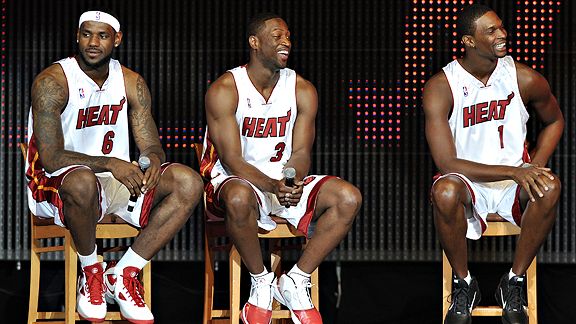
The Big Three won last night on NBA Opening Night, but probably not The Big Three that you're thinking of. No, not LeBron James, Dwayne Wade and Chris Bosh, instead, Boston's Three Party, Paul Pierce, Ray Allen and Kevin Garnett got their first W. But the most prolific player of the game was not one of those six mentioned above. The game's most valuable player instead, was Celtics point guard Rajon Rondo, who showed everyone last night that he was the heart and soul of this Celtics team with his astounding 17 assists.

The hype was there, in fact, it was the most anticipated opening game in NBA history, but the talent wasn't. In the first quarter, arguably the two best teams in the Eastern Conference played like they were back in middle school, with the Celtics only up 15-9 after the first 12 minutes of play. Rondo was the only player who showed any promise at all in the first quarter and even the first half, serving as the engine that kept the Celtics offense moving. Shaquille O'Neal also launched a Shaq Attack early, throwing down two slams in the first quarter to help get the Celts started and even made two consecutive free throws late in the second quarter, a rarity for the big man.

The Heat on the other hand didn't have anything going for them early. They came out looking as if they expected everything to gel right away but didn't know how to make it work yet. Dwyane Wade was playing for the first time since he pulled his hamstring in the Heat's first preseason game and it showed as he shot a dismal 4-for-16 from the field. He played very erratically, not exactly knowing where to be on the floor with LeBron taking over the role of floor general that he has played his entire career. He and LeBron both struggled communicating however, combining for 14 turnovers over the course of the game.

Although it looked as if LeBron had made a huge mistake by taking his talents to South Beach in the first half, that quickly changed once the second half began. With Wade and Bosh on the bench, LeBron was able to get back to the way he played in Cleveland and keep the ball in his hands, which is how he seems to be most effective. It's great that he scored 31 points that way, but the negative side is that he may not be able to play well off of the ball. Throughout his basketball career, James has always been the guy with the ball and the de facto point guard, and now with two other stars who are used to having the ball in their hands as well, it'll be interesting to see how LeBron James is able to play the supporting role during the game, for the first time in his life.

Then there's Chris Bosh. Where does he fit in in all of this? He quietly went 3 for 11 on the night, but managed to pull down eight rebounds. Bosh, a finesse big man, will have a much tougher time fitting in on this team than anyone else. He has about as little power as a power forward can have, and it's even worse when he finds himself playing center. That means that he needs the ball in his hands to be effective more than a usual, powerful big man does, which won't happen with only one ball on the floor and LeBron and D-Wade being the two best players on the team. He'll need to be pulling down even more offensive rebounds than he does now if he wants to score some points. Another problem is that Bosh isn't strong enough to go up against the likes of Dwight Howard and Shaquille O'Neal, the two big men on the other two best teams in the east. Bosh is going from being the best player on a terrible team to being the third best player on what is supposed to be one of the most talented teams ever assembled, and it's going to be interesting to see how he'll handle the change; if it doesn't go well, the Heat may have to change their nickname from the "Big Three" to the "Big Two and The Other Guy."

Then there's the team playing as a unit. Last night, when all three players were on the floor at the same time, it looked like they were each taking turns making plays. One possession it would be LeBron's turn to do something, the next it would be Wade's, then Bosh's then again and again. In order for this team to be effective, they're going to have to learn how to move off the ball, something that none of them have much experience with. But that comes with time and experience as a team, and there's still a lot of both to be had.

The Heat aren't going 82-0, not this year at least. As LeBron James said somewhat arrogantly, "we all know Rome wasn't built in one day." A bit cocky, but he's probably right, this experiment will work out. There's too much talent and young talent at that, for it not to work. It'll take time for everyone to get used to playing with one another, but team chemistry will develop. There's still 81 games left, and in this team's first game against the reigning Eastern Conference champs, and almost reigning NBA champs - albeit that the Celtics did not play as such in this game - they only lost by eight points. Considering the circumstances and the way the played in the first half, the Heat should almost be happy with the outcome; eight points can come very easily as Knicks fans know (http://www.youtube.com/watch?v=nieBAq8FQYE&feature=related, seeing that never gets easier). It'll be interesting to see how everything comes into place for this Heat squad, but one thing's for sure, it will come into place, or else someone's gonna have some explaining to do.

Wednesday, October 6, 2010

Title IX’s Beneficial Intent Becoming Discriminatory


My beef this week is with the discrimination against males in intercollegiate athletics that Title IX has caused.

No, this isn’t an anti-feminist stand; Title IX has done great, necessary things for women’s sports. The problem is, this success has created inequality — exactly what Title IX is supposed to be getting rid of.

Most people are very familiar with Title IX, but few are familiar with its history. Title IX was enacted on June 23, 1972, and is part of the Education Amendments of 1972. The original law states that, “No person in the United States shall, on the basis of sex, be excluded from participation in, be denied the benefits of, or be subjected to discrimination under any education program or activity receiving Federal financial assistance.”

There is never any mention of sports in this original statute. Only after the original statute and after the Department of Health, Education and Welfare got involved did intercollegiate sports become affected by Title IX.

A few years after its inception, under the Carter administration in 1979, the Department of Health, Education and Welfare further specified what they would recognize as compliance with the law. This test is made up of three parts (only one of which schools have to follow), and is often referred to as the proportionality test. The test states that schools in compliance must either “have the same proportion of girls in sports as enrolled in school; [be] expanding the opportunities for girls in sports; or [be] satisfying the entire interest of girls to participate in sports.”

Since the last two are vague, to be safe, many schools just follow the first rule of compliance and try to keep the proportion of female athletes equal to the proportion of female students at the school.

The proportionality test seemed like a great idea at the time. The late 1970s and early ’80s saw equal enrollment between males and females, but that didn’t last as women have since outnumbered men. According to the American Council on Education, females have consistently made up around 57 percent of enrollments at American colleges since 2000. That means that under the proportionality rule, 57 percent of college athletes should be female.

Doesn’t sound very equal to me.

Many critics of Title IX propose that the number of men’s and women’s sports and athletes be based on the interest of each sex to participate in varsity athletics. They argue that interest should be based on participation in specific sports on the club and intramural level, as well as the number of students interested in trying out and the level of interest among high schoolers who hope to participate on collegiate varsity teams. One problem with this is that it would result in more male than female sports teams. In 2009-2010, according to the National Federation of State High Schools, 4,455,740 boys participated in high school athletics as opposed to 3,172,637 girls.

There’s an even bigger discrepancy concerning participation in intramural sports in college where men outnumber women four to one. Although the difference in the number of male and female athletes seems large, it’s a lot smaller than what it has been in decades past, showing that Title IX is doing its job in promoting female participation in athletics. Basing the number of sports teams per gender off of interest would stunt this growth too much for it to be a viable option.

Many proponents of Title IX point to the gargantuan amount of funding that goes to football and men’s basketball teams as the main problem for a lack of funding for small-scale men’s sports, not Title IX.

The first problem with this argument is that the reason most men’s sports are being cut is not because of a lack of funding, but because of the need to comply with Title IX’s proportionality test.

One great example of this is the Marquette University wrestling team. In 2001, the team was dropped despite the fact that it was completely financed by alumni and other program supporters. It wasn’t even competing for funding with a football team, something Marquette still doesn’t have. The only reason was to comply with Title IX.

The majority of men’s teams being cut are usually ones with few if any scholarships, ones funded without the school’s money (or very little of it) and ones that have no big-time football or basketball team to compete with for money.

The second problem with the argument citing high funding for football and men’s basketball as the main problem for the destruction of small-scale men’s sports is that in cutting down funding for these revenue-producing sports, the institution is biting the hand that feeds it and cutting down on the profits that these sports make — profits used to fund small-scale sports. If a school was to cut down funding for popular sports, the talent that these teams would be able to recruit would go down dramatically.

If recruiting plummets, the team falls on hard times and interest among fans drops, resulting in a drop of revenue and profits that the team produces. Since those profits are usually used to help finance other sports, a decrease in them would result in smaller sports getting cut. More funding for football and men’s basketball teams therefore, doesn’t cut down the funding for other men’s sports — it increases it.

The solution to the problem of Title IX is quite simple. Instead of proportionality, colleges should have to have an equal amount of male and female teams and/or athletes. That way everyone gets an equal shot at participating. Another good idea that’s been bounced around is discounting students ages 25 and older in proportionality tests. This age group, which makes up around 40 percent of the undergraduate population, will most likely not be partaking in varsity sports, and therefore shouldn’t be counted in these tests. This would be extremely important, as the American Council of Education’s report “Gender Equity in Higher Education: 2010” showed that female college students ages 25 and over outnumber male college students of the same age group, two to one. Implementing either or both of the systems would be a great way to reform Title IX.

Title IX has done great things and is still vital to increasing female interest in sports to this day. But advocates of Title IX are as stubborn as ever, unwilling to budge in fear that all of the battles they have won over the years will be for naught if they give in even the slightest bit.

The fact of that matter is though, that reform is necessary, and if Title IX advocates truly believed in equality — as they claim — they’d be open to it.

Originally appeared in The Hoya on 10/1/2010

Tuesday, September 21, 2010

Boise State Deserves Fair Shot


My beef this week is with people arguing against Boise State’s No. 3 ranking in the AP polls. Funny thing is, I used to be one of those people.

When I had the idea for this article it was because I had a beef with Boise State being ranked so high. I believed, like many others, that if Boise State didn’t have a good opponent on its schedule, then it didn’t deserve to be in the national championship. If they were to play the top teams in the SEC or Big 12, they would get their butts handed to them as badly as if they were the 2008 Detroit Lions playing the 1972 Dolphins. I still believe, even as you read these words, that Boise State would lose to the top teams in college football.

So why do I think they should have the right to play for the national championship (if they go undefeated, that is)?

Well, I figured there had to be a reason that Boise State isn’t playing the Alabamas and Floridas of the world. After all, Boise knows better than anyone that they can’t make a BCS title game without playing high-caliber teams.

Why play the losers of the college football world year in and year out? The fact of the matter is that Boise State doesn’t want to have a cupcake schedule. They are hungry to play the best teams in college football.

You would think some of the relatively cocky, traditional powerhouses would jump at the opportunity to put a mid-major like Boise State back in its place, but they don’t. In fact, it seems as if they’re afraid of the former junior college. Boise State Athletic Director Gene Bleymaier has said publicly, loudly and clearly that the Broncos will play anybody, anytime, anywhere. Yet, no program is returning his calls. The main reason seems to be that teams in the big conferences don’t see any reason to. They already have tough opponents to play within their conferences, so why challenge themselves further?

If a major conference team beats everyone on its schedule, history shows that that team is a virtual lock for the national championship, as only one undefeated team from a major conference — Auburn in 2004 — has failed to make the national championship game in the BCS era.

Even one or two losses can get a major conference team into the championship game. With that in mind, these teams figure that they might as well just throw in cupcake nonconference teams that are willing to get beaten down just to get some exposure. The inability to get tough nonconference opponents puts Boise State between a rock and a hard place. They’re left crushing teams in their conference, yet they don’t get the chance to prove themselves against top-notch teams on the biggest stage. Last year was especially frustrating for Boise State. Even though they beat Oregon — a team that went on to play in the Rose Bowl — and even though their average margin of victory was 26.5 points, and even though they finished a perfect 13-0, the Broncos were left playing another unproven team, TCU, in the Fiesta Bowl.

They won that clash 17-10, making them the only other undefeated team in Division I aside from Alabama. How is it fair to shut out a team that went unbeaten and did everything it could to prove itself in the national championship? But this year may be the Broncos’ time to shine. They started the season off with what was supposed to be a big game against Virginia Tech, who came into the season ranked 10th.

Despite going down 17-0 early, the Hokies fought back and made it a close game, but the Broncos ended up winning the game 33-30. With Virginia Tech — Boise’s strongest opponent on its 2010 schedule — behind them, the Broncos looked well on their way to an undefeated season and an appearance in the national championship game.

Then, Virginia Tech lost to James Madison the following week, a Division 1-AA school. Virginia Tech not only killed its flickering national championship hopes, but also may have squandered Boise State’s chances of a title berth. Boise State’s strength of schedule went down dramatically and now with the exception of Oregon State on Saturday, they have no tough opponents left.

As if the Hokies didn’t hurt Boise’s chances enough, Alabama and Ohio State are looking as if they’ll both go undefeated. Both have experienced players and neither team has shown much weakness so far. And here’s the dilemma: If Alabama doesn’t lose, if Ohio State doesn’t lose — heck, if most teams in any major conference don’t lose — they’ll probably have a better shot at a national championship bid than Boise State.

Boise just joined a growing Mountain West Conference with members like BYU, TCU and Utah, but it seems as if that won’t help them much. Despite its powerful teams, the MWC still doesn’t have an automatic BCS bowl bid, even though it’s arguably stronger than both the ACC and the Big East, whose champions automatically get a spot in one of the BCS bowls. Prejudice against smaller conferences has been going on for some time now; Boise State isn’t the first team to have its growth limited by the BCS. Before Boise came Utah, and before Utah came Marshall. Other non-BCS teams like TCU, BYU, Tulane and Hawaii have asserted themselves as contenders during the BCS era, but like Boise State, they have all all been pushed aside and put in one of the less prominent bowl games.

Up until the 2004-2005 season, when Utah crashed the BCS party and won the Fiesta Bowl, no non-BCS team had made it to a BCS bowl game. Before that game, including Utah that year, three non-BCS teams had finished the season undefeated in the BCS era. Since then, three more have. But none of them have been given a shot at the national title. In the established sport of college football and in all sports, it’s tough to be a newcomer. Precedent constantly seems to overcome rationality and logic. People have been calling for a playoff system for some time, but it doesn’t seem as if that will be coming anytime soon, either.

This Broncos team is the best chance that minor conferences have to be recognized as legitimate. They can change the college football landscape if they go undefeated, and hopefully the BCS will let them play in the title game and give them their rightful chance to do so.

Originally appeared in The Hoya on 9/21/10

Friday, September 17, 2010

Stricter Punishment Needed For Florida Football Team


My beef today is with the University of Florida football team as well as its coach, Urban Meyer.

This past week, Florida WR Chris Rainey was arrested and charged with aggravated stalking, a third-degree felony. This took place after Rainey sent a threatening text message to a former girlfriend, which reportedly read "Time to die."

I am usually an SEC supporter and admirer of the talent that SEC football has relative to other conferences. I think the impressiveness of a college football program like Florida winning year in and year out is often overlooked just because that's what they're expected to do. That being said, although it's tough for teams like Florida to live up to on-the-field expectations, it shouldn't be tough to live up to off-the-field ones.

Although it's tough to top that story, what this crime is part of may be even scarier. You see, we all know Florida's coach Urban Meyer is one of the top college coaches in the country. In his short five year tenure (going into his sixth year) at Florida, Meyer has managed to win two national titles, almost unheard of in the college game. Still, those two titles pale in comparison to the 30 players that have been arrested during those five years. Yes that's right, Chris Rainey is the thirtieth Florida football player to be arrested under Urban Meyer. Meyer might as well be recruiting all of his players from juvenile detention centers.

Just think about that number for a second; that's almost six arrests per year. There have been DUIs, burglaries, misdemeanor alcohol charges, battery charges, resisting arrest, marijuana possession and purchase, etc. Sounds like the type of guys all fathers want their daughters to marry.

As fans, we don't usually ask much out of our student-athletes (if that term is even applicable to intercollegiate athletes anymore) especially the ones that participate in popular sports like football and men's basketball. Athletes with high GPAs, who go to class and are involved in their community are usually the exception rather than the norm, not that there's anything wrong with that; athletes are on very time-constricting schedules and mostly got into the school they're attending for their athleticism not as much their brains, to play their respective sport first and study on the side. Most football players are just expected to do well enough in class during the week, so that they can participate on Saturdays. That's the way it is, and no complaints or protests are going to change the system anytime soon. But, when a number of a football team's players are arrested and charged with crimes, even if some of those charges are eventually dropped, it's disappointing and aggravating to say the least.

College coaches aren't paid the big bucks to just coach college football. In addition to their football duties, they have to make sure these kids grow into men. It may sound corny and cliche, but it's true. Like most college athletes, many of Florida's players won't be going on to play in the NFL, instead their times of football glory will come to an end, and they'll have to assimilate into the real world, no longer being the demi-gods they used to be. Urban Meyer isn't helping these kids do that. Many people claim that Meyer is trying, but trying doesn't matter in this case unless you get results, and if he was trying, he wouldn't have a problem of this magnitude; it's not as if players at every other powerhouse college football program in the nation are getting arrested.

There's a lot that needs to be done. Meyer has to start coming down on his kids harder than he already has. Just because Tim Tebow was a do-no-wrong player, doesn't mean all of Florida is, and it doesn't mean that Meyer is a strict coach; it just means that Tebow was a devout Christian. Without Tebow, without one single player, Meyer would probably be getting much more flack (which he deserves) for all of these arrests. If it was just one troublesome, misguided player that would be fine, but 30 arrests show that Meyer has to take a lot of the blame, especially when he recruits those players, and can therefore stop a lot of the crime, by just implementing stricter punishments and making examples out of the criminals on the team to show he means business.

The school also has to take action. If Meyer isn't going to do something about cutting down on crime than they have to. The football team isn't a separate entity and shouldn't be treated like it is, it's part of the school and its athletes are the school's students. They represent the school wherever they go and if UF doesn't start cracking down on this 'I can get away with anything because I'm on the football team' attitude that has apparently been instilled in its players, it just sadly goes to show that they're more worried about winning games and profiting off their players than they are with helping these young men become disciplined.

I'm not going to say that the school should put these players on constant watch; they're not babies anymore, they should know how to at least behave themselves well enough, as to not get arrested. What I'm calling for are stricter punishments for those that do break the rules. The best way to prevent someone from doing something, is to take make sure that the costs of the punishment outweigh the benefits of an action. With football players, that thing they love most is playing football. If team management starts suspending these guys for entire seasons, players will start taking notice. But stupid people will do stupid things, and therefore Florida has to start taking more precautions in the recruiting process. Guys with records of causing trouble should mean a big red light for the Gators from here on out. The best way to stop crime is to stop recruiting criminals.

College athletes have to learn that they can't get away with everything. Some of these guys will probably be celebrities in at least the state of Florida in the future, but many of them will just be average Joes after their four years of college are up. There is life after college football, and what these players need to understand is, in the real world, you can't get away with everything.

Wednesday, September 15, 2010

NFL Has to Consider More Than Just Money


My beef this week is the proposal to expand the NFL Regular Season to 18 games.

Commissioner Roger Goodell and NFL owners have proposed a plan to lengthen the regular season from 16 to 18 games and shorten the preseason from four to two games. The playoff system would be left intact.

If the proposal is accepted by the owners and the players association, the changes would be implemented starting in 2012.

One major sticking point in the effort to convince the players to lengthen the season is upping their average salary.

It seems as if a longer regular season would please fans, owners, players and essentially everyone in football, so why, you might ask, am I raining on everyone’s parade?

Don’t get me wrong, I love me some football. There’s nothing I’d like more than to have football all year-round. But despite my love for the game, and despite the fact that football players get to play a game that they love for monstrous sums of money, the equally monstrous hits that they take can inflict a serious toll on the life they lead after football. 

Many people argue that athletes are in better shape than anybody and that two extra games shouldn’t make a significant physical difference. Sure, two extra games doesn’t seem like a lot, but when you consider that the average star running back plays for about a decade — if they’re lucky — that comes out to 20 extra games that that player is participating in over his career. That’s a whole season and a quarter — a lot of extra wear and tear for a 10-year veteran.

According to a recent story in the The New York Times, a study from the year 2000 surveying 1,090 former NFL players discovered that more than 60 percent of players had experienced at least one concussion in their careers, while 26 percent had three or more concussions.

Another study done by the University of North Carolina in 2007 uncovered that out of the players with three concussions or more, 20.2 percent said they had been diagnosed with depression at some point following their retirement.

It gets worse. A study in 2009 conducted by the University of Michigan showed that Alzheimer’s disease as well as other similar, memory-related diseases were found at a rate 19 times higher in NFL players, ages 30 to 49, than in other men the same age.

It’s not as if the NFL isn’t doing anything to prevent these issues. The league has taken precautions to make football players aware of the risks that they take by playing the sport, including recently putting warning signs in lockers that describe the symptoms of concussions and the long-term risks a football career can pose for one’s health.

Additionally, the NFL is doing what it can to keep players who show signs of a concussions off the field. The major problem is that the league promotes the glory of playing through pain, which isn’t so glorious when you have a serious injury.

One of the best examples of the dangers of football is the life of Mike Webster, who had a 17-year NFL career and is widely considered the best center in football history. But like many football players, he suffered direct repercussions from his playing days during retirement. As a result of his lengthy career, which many doctors liken to the equivalent of suffering 25,000 car crashes, Webster suffered from a brain disease known as chronic traumatic encephalopathy, as well as amnesia, dementia, depression and bone and muscle pain.

For years, he slept in his pickup truck as well as in train stations. When he sued the NFL in 1999 for full disability benefits, he was denied, and as a result went into serious debt. He distanced himself from family and friends and was divorced in early 2002. He died six months later at age 50. Only in 2005 was his estate granted full benefits.

Modern-day players also suffer in retirement from injuries that occurred during their playing days. Former Jets wide receiver Wayne Chrebet, who suffered numerous concussions during his 11-year career, constantly has trouble remembering how to get places — even his own home.

Unfortunately, sometimes head trauma goes unnoticed. Former Bengals receiver Chris Henry died of blunt force trauma to the head after falling out of the back of a moving truck that was being driven by his fiancée. Only after his death did doctors find out that Henry suffered from the same brain disease Webster suffered from. Henry had never even been diagnosed with a concussion.

Thousands of players wake up every morning with blistering headaches, and some like Webster and Chrebet can’t live normal lives as a result. It’s nice to see that the NFL is finally taking action, but the league isn’t even close to where it should be on these matters.

The NFL is notoriously known as having the worst disability and pension plans in sports. Until these plans and equipment safety are improved, the NFL should not be allowed to pursue an 18-game schedule.

Originally appeared in The Hoya on 9/10/2010

Tuesday, September 14, 2010

Don't Fear, The Jets Are Still Here


My beef today is with almost everything that the New York Jets did last night in their opening game against the Baltimore Ravens.

Everyone around the country seemed excited about this Jets team coming into the season, especially with HBO's Hard Knocks and Rex Ryan's trash talking; some even picked them to be the best team in the NFL this year. Last night the Jets were anything but.

It was an ugly game just like everyone expected, but it certainly wasn't ugly in the way that everyone expected. Sure, you can say both defenses were gritty and tough, but the main reason neither team scored points was the play from their respective horrendous offenses. The Ravens were able to consistently advance the ball but early turnovers cost them. On the Ravens' first drive, Joe Flacco fumbled the ball when he was sacked at his own 20 and a recovery set the Jets up for a field goal. Then on their next drive, they advanced the ball deep into Jet territory, but lost it when the Jets jumped on a Willis McGahee fumble inside the Jets' 20. The last Ravens turnover came right in front of the Jet endzone, when Antonio Cromartie picked off a ball intended for Anquan Boldin and returned it to the Baltimore 24 yard line. Those plays were about the only bright spots for the Jets though.

The big show of the night was the Jets' stagnant offense, and calling it that is being kind. It was more like atrocious, horrific, disgusting, and just downright foul. Yet, I don't fault the players even as close to as much as I fault offensive coordinator Brian Schottenheimer. The play-calling by Schottenheimer was elementary to say the least. I understand that the Jets love establishing their running game, with their ground 'n pound style of play that Rex Ryan has become famous for, but it wasn't finishing the job for them last night. With a defense as talented as the Ravens', especially in their front seven, the Jets needed to combine their big runs, which they did have a few of, with more play-action passes and deep balls from Sanchez.

The Jets also needed to mix up their play-calling. They only passed twice on first down in the entire game, one time was a great pass to Dustin Keller that would have put them on the doorstep of the endzone, but was called back because of an illegal shift by Braylon Edwards. The other was a five yard completion. With 7:07 left in the third quarter, after a big Brad Smith kick return and with the Jets down 10-6, it seemed as if momentum could swing in their favor. Instead they went three-and-out after running the ball three straight times.

Look, I'm a supporter of protecting and developing Sanchez but Schottenheimer just babied him last night, consistently turning to a running game that could only give him so much in return, with a struggling Shonn Greene. Through the middle of the fourth quarter, Sanchez had only thrown the ball a dozen times. Many people criticized Sanchez last night for checking down to his running backs too often, but how could he have the confidence to throw downfield, when his offensive coordinator rarely gave him any opportunity to.

The Jets can ram the ball down the throats of mediocre opponents all they want, but Sanchez needs more opportunities to throw the ball than he got last night against good team like the Ravens, especially when they expected him to step up in a two-minute drill and throw the ball every play. It was like asking a quarterback to come off the bench and lead the final drive all the way downfield, and he could have done it if not for Dustin Keller. On a crucial fourth down with less than a minute in the game, Sanchez found Keller and got the ball to him just short of the first down a few steps from the sideline. Instead of attempting to get the ball past the first down marker he ran out of bounds and the Jets fell a yard short of having the drive live on. So say what you want about Sanchez, but this Jets offense only got six downs, tying them for a franchise worst, as a result of Brian Schottenheimer's boneheaded play-calling.

Then there were the penalties. My God, it seemed like every other play, especially on defense was a penalty. For all of those cocky Jets fans who thought the Jets could do without Revis, just imagine what this game would have been like if only Antonio Cromartie and Kyle Wilson had been playing. The entire Jets squad combined for 14 penalties totaling 125 yards, compared to the Ravens' five totaling 38 yards. The two CBs had a horrendous first half, surrendering a combined four penalties for a total of 60 yards, and then on top of that struggled in the second half to stop the passing game. Revis didn't play often, but when he did, it was easy to see that he was back to being Revis Island, shutting down whomever he covered. Why the Jets didn't use him on the Jet killer Anquan Boldin who ran all over Cromartie for 110 yards, is understandable considering Revis' missing training camp, but still inexcusable in such a close, important game.

There were some positives however. The front seven played like they were possessed by the football gods, getting in Joe Flacco's face and completely shutting down the Raven running game, which only had 49 total yards on a combined 35 carries. Bryan Thomas especially stepped up in Calvin Pace's absence with 9 tackles and 1.5 sacks. Mike Westhoff's special teams also looked wonderful with some great returns and awesome coverage, but that was no surprise considering Westhoff's outstanding track record.

The best thing that I took out of this game was how close it was. Despite the penalties and the terrible, offensive (not in the good way) offensive play, the Jets only lost by one point to a team that many experts have representing the AFC in the Super Bowl. One of the signs of a great team, is that on even their worst nights they can stay with almost anybody. The fact that the Jets were so bad, yet were in the game all the way up to the final seconds, shows me that this team has the potential to win it all.

There will be some big questions to answer though. With today's news that Kris Jenkins will miss the rest of the season, as he did last year, with a torn ACL, the Jets front seven will need to hang tight as they did last night, with both Jenkins out all year and Pace out for the first few weeks - the Jets' toughest part of the schedule - and back-ups will have to step up as they did last night. There's also the question as to whether Shonn Greene will be able to step into the starting role. Many assumed based on his playoff performance last year that he would be a top back in the league this year, but with two fumbles last night, it's clear that he may need more time to develop and that LT will need to duplicate the great performances he had in the pre-season. If that occurs, more pressure will be put on Mark Sanchez to lead the team. With Revis undoubtedly getting more playing time next week against the Patriots after the secondary disaster this game, the defensive backs shouldn't be worried about too much, and the defense seems like it's still the best in the league even without Jenkins.

As many people predicted, much of the pressure lies on the second year QB from USC, because if the Jets want to be an elite team, which they have the potential to be, they are going to have to learn to play outside of their comfort zone more often, and that involves letting Marky Mark do what he gets paid to do in throwing the football. Hopefully Schottenheimer and Ryan realize that sooner rather than later.

Rex Ryan hasn't been hyping this team up for nothing. People think that he made a fatal mistake in talking the talk, before he was able to walk the walk after one bad game. The truth is, the defense thrive off of his leadership and inspiration and they can and will make the Jets one of the best teams in the league this year. The penalties will float away as the defense becomes more cohesive as a unit throughout the season and the offense will find its rhythm, especially with Santonio Holmes coming back after four games. It's Week 1 haters and worriers, come talk to Rex Ryan and the rest of the Jets in December when they're playoff-bound.